
- Home
- Adhesive Tapes
- Self-adhesive Label
- Label Jumbo Roll
- Solutions
- About Us
- News & Insight
- Resources
- Contact Us

Views: 0 Author: Site Editor Publish Time: 2026-08-15 Origin: Site


E-commerce and B2B shippers face intense pressure today. Consumers and regulators demand the immediate elimination of plastic packaging. You must achieve this without compromising package security during transit. Traditional poly tapes ruin the recyclability of corrugated cardboard. Yet, many "eco-friendly" alternatives suffer from weak adhesion. Others are simply greenwashed products lacking real environmental benefits. This leaves procurement teams frustrated and shipments highly vulnerable to damage. We provide a skeptical, procurement-focused evaluation here. You will discover the top sustainable tape brands available on the market. We compare material realities, upfront cost implications, and true performance at scale. You will learn how to match specific tape formats to your distinct operational needs. This guide ensures you make sustainable choices tailored to your business. We will help you protect your inventory and your brand reputation simultaneously.
Performance Reality: High-quality degradable tape matches or exceeds the tensile strength of plastic alternatives, provided the right type is matched to the carton weight.
Top Formats: Water Activated Tape (WAT) is best for high-volume, heavy shipments, while self-adhesive Kraft Tape and Cellophane Tape suit lighter, standard B2C fulfillment.
Compliance Lens: True sustainability requires verifying adhesives (e.g., natural rubber/starch) and checking for certifications like FSC-sourced paper or verifiable compostability standards.
Overall Cost Impact: While unit costs are higher, switching often requires less tape per box and yields measurable gains in brand perception and unboxing experience.
Procurement managers often doubt sustainable adhesives initially. They worry about boxes popping open during transit. We must address this primary objection head-on. Plant-based adhesives actually form a destructive bond upon application. Starch-based gums physically fuse into the cardboard fibers. Natural rubber adhesives penetrate the porous surface of corrugated cartons. If someone tries removing the tape, it tears the box surface. This tamper-evident seal is often stronger than standard acrylic plastic tape. Acrylic tape merely sits on top of the box surface. It can easily peel off under stress. High-quality alternatives integrate into the carton itself, ensuring maximum security.
Weather resistance represents another major concern for logistics teams. Packages often sit on hot porches or freeze inside delivery trucks. Synthetic poly tapes become brittle in extreme cold. They also lose their tackiness in high humidity. Paper-based tapes perform exceptionally well in variable climates. Cellulose options handle moisture much better than expected. Natural rubber maintains its elasticity across wide temperature swings. You will experience fewer failed seals during winter shipping rushes.
Sustainable tapes generally cost 15% to 30% more per roll. We state this cost difference transparently. However, you can offset these upfront costs easily through smarter application. Plastic tape often requires multiple strips to secure a heavy box. Packers frequently use the overlapping "H-tape" method. Sustainable alternatives usually require only a single, strong strip. This significantly reduces tape consumption per parcel. You also gain improved customer retention. Eco-conscious buyers appreciate plastic-free unboxing experiences. They often reward sustainable brands through repeat purchases.
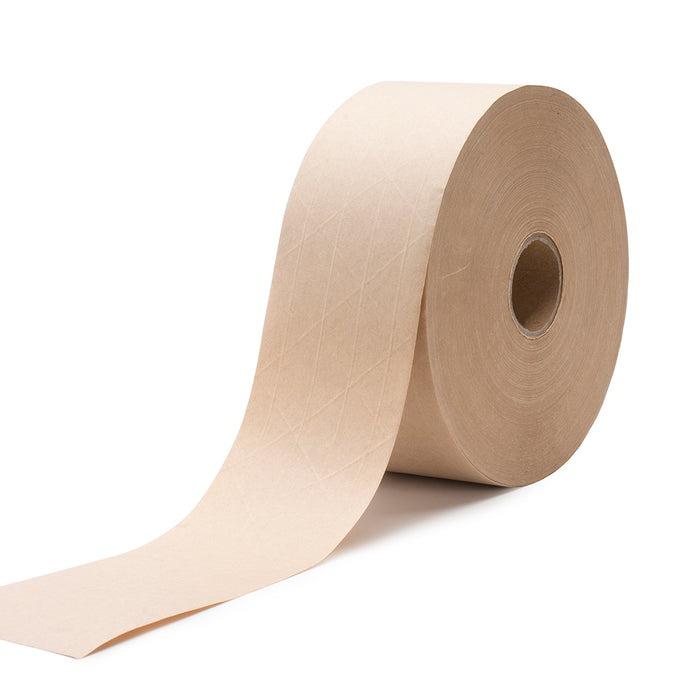
This format dominates high-volume fulfillment centers. It handles heavy boxes easily and provides maximum security. The tape mechanisms rely on a starch adhesive. When moisture hits the backing, the adhesive activates immediately. It then physically fuses directly into the corrugated carton. This creates an incredibly strong, tamper-evident seal. Transitioning to this format requires upfront investment. You will need manual or electric dispensers for your packing stations. The initial equipment cost pays off rapidly through increased packing speeds. Water Activated Tape remains the gold standard for heavy B2B shipments.
Mid-volume shippers prefer this option for its simplicity. It suits multi-purpose packing and allows for easy warehouse adoption. The design features a flat or crepe paper backing. Manufacturers coat it using natural rubber or hot-melt adhesive. Packers can use it exactly like traditional plastic tape. They do not need expensive water dispensers. You must evaluate the adhesive carefully before purchasing. Ensure the manufacturer uses fully repulpable materials. This guarantees the entire box can enter standard recycling streams. Degradable Tape and Kraft Tape combinations offer the most seamless transition for growing brands.
Boutique brands love this format for lighter parcels. It offers a premium aesthetic and feels exactly like poly tape. However, it contains zero plastic. The mechanism uses a plant-based cellulose backing paired with natural rubber adhesive. It applies smoothly and looks highly professional. You must educate your customers about this material. Because it visually resembles standard plastic, buyers might throw it in the trash. Highlighting its compostable nature improves the unboxing experience. Cellophane Tape provides a sleek finish for high-end B2C deliveries.
You must differentiate between various end-of-life claims. "Recyclable with box" means the tape is curbside repulpable. Consumers can drop the entire package into their standard recycling bin. "Industrial compostable" represents a completely different waste stream. These tapes require commercial composting facilities to break down properly. Do not confuse the two when selecting a supplier. Curbside repulpable options generally offer better convenience for average consumers. Degradable Tape should align perfectly with your customers' local recycling capabilities.
Custom branding capabilities matter deeply for e-commerce visibility. Assess potential suppliers on their printing technologies. They must use eco-friendly soy or water-based inks on custom mailing tape. Harsh chemical inks ruin the sustainability profile of paper tapes. Furthermore, heavy ink coverage can sometimes degrade the adhesive quality underneath. Request physical samples to verify print clarity and stickiness. The branding should elevate your package without compromising the seal.
Evaluate suppliers based on their scalability and Minimum Order Quantities (MOQs). Many boutique eco-brands offer beautiful products but struggle with enterprise volume. If you run a large warehouse, you need consistent pallet deliveries. Small-batch suppliers often face raw material shortages during peak holiday seasons. Ask potential partners about their surge capacity. Ensure they can fulfill enterprise-scale demands consistently year-round.
Instruct your procurement team to verify specific certifications. Look for FSC (Forest Stewardship Council) certification for all paper tapes. This ensures the paper originates from responsibly managed forests. For compostable options, demand proof of ASTM D6400 or EN 13432 standards. These certifications guarantee the material breaks down safely within a specific timeframe. Never accept vague "earth-friendly" claims without verifiable third-party documentation.
Supplier Evaluation Framework
Evaluation Criterion | Key Question to Ask | Ideal Standard |
|---|---|---|
Adhesive Material | Is the adhesive repulpable? | Starch or Natural Rubber |
End-of-Life | Can it stay on the box? | Curbside Recyclable / Repulpable |
Certifications | Are materials verified? | FSC, ASTM D6400, EN 13432 |
Scalability | What are the MOQs for custom prints? | Flexible MOQs + Enterprise Capacity |
EcoEnclose dominates the market for strict circular materials. They prioritize complete transparency regarding their sustainability data. Their product line includes exceptional water-activated and kraft options. They design every product to ensure strict curbside recyclability. You will never find greenwashed claims in their catalog. They serve brands prioritizing zero-waste marketing. If your company enforces rigorous eco-compliance rules, EcoEnclose provides the safest procurement choice. They document the exact origin and end-of-life process for every roll.
Tape Jungle excels at massive variety and scalable custom printing. They cater directly to high-volume fulfillment centers. You can choose from multiple adhesion grades, ranging from standard to heavy-duty reinforced. They handle complex enterprise branding requests effortlessly. Their printing process utilizes environmentally safe inks without degrading performance. High-volume B2B shippers need heavy-duty security alongside custom branding. Tape Jungle bridges this gap perfectly. They maintain enormous inventory levels to prevent peak-season shortages.
Friendly Turtle serves independent creators and boutique D2C brands. They offer highly aesthetic cellophane and kraft options. Their standout feature involves incredibly low MOQs for custom designs. Small businesses often cannot afford ordering thousands of rolls at once. Friendly Turtle allows startups to achieve premium, eco-friendly unboxing experiences on a budget. Their cellulose products look visually stunning on artisanal packaging. They understand the visual marketing needs of modern micro-brands.
Rapid Packaging targets enterprise logistics networks. They do not just sell tape. They bundle sustainable tape supplies with commercial-grade dispensers. Their team assists with full warehouse integration. Transitioning from hand-held plastic tape guns to automated stations requires logistical expertise. Rapid Packaging smooths out this operational friction. They install electric dispensers, train warehouse staff, and supply pallet-level volumes. Large 3PLs (Third-Party Logistics) choose them for seamless, facility-wide eco-upgrades.
You must acknowledge inherent storage limitations. Natural adhesives degrade much faster than synthetic acrylics. You cannot store these rolls in a hot, humid warehouse indefinitely. We advise implementing strict climate control for your tape inventory. Keep the storage environment cool and dry at all times. Natural tapes typically possess a 6-to-12 month shelf life. If you over-order, the adhesive will eventually fail. Practice precise inventory management to prevent material waste.
Operational friction often surprises management during the switch. Warehouse staff develop muscle memory using standard plastic tape guns. Introducing water-activated dispensers or paper tape tear-offs creates a temporary learning curve. Packing speeds might dip during the first two weeks. You must highlight this expected slowdown to your operations team. Provide proper training sessions before the official rollout. Show your staff how paper tape requires different tension and handling techniques.
We strongly recommend executing a pilot testing phase. Never order full pallets before testing the tape on your exact corrugated boxes. Recycled content boxes often feature shorter paper fibers and different surface textures. These recycled surfaces sometimes resist certain natural adhesives. A tape performing perfectly on virgin cardboard might fail on 100% recycled boxes.
Standard Testing Protocol:
Audit your current box weights and categorize them (light, medium, heavy).
Request physical sample rolls from two or three shortlisted suppliers.
Seal five boxes of varying weights using the new tape.
Expose these test boxes to varying temperatures (refrigerators, hot warehouses).
Perform a drop test to verify the seal's integrity under impact.
Your final brand choice depends entirely on your operational scale and package weight. Heavy B2B shipments demand the fusing power of water-activated tape. Lightweight D2C parcels do perfectly well with aesthetic cellulose or self-adhesive paper tapes. There is no single "perfect" tape for every business. You must balance upfront costs against the long-term benefits of brand loyalty and package security. Transitioning away from plastic requires strategic planning, but the environmental and marketing rewards justify the effort.
Take action immediately by auditing your current box weights. Document your highest-volume carton sizes. Contact your shortlisted suppliers and demand physical sample rolls. Run the limited warehouse stress test outlined above. Involve your warehouse floor workers in this testing phase. Their feedback regarding application speed and ease-of-use remains invaluable. Once you verify the adhesion strength on your specific boxes, you can confidently phase out plastic tape forever.
A: Yes, in most cases. Water-activated and standard paper tapes are usually curbside repulpable. The recycling facility breaks them down along with the cardboard. However, some heavy-duty tapes or synthetic eco-tapes must be removed first. Always check your supplier's exact repulpability specifications before making assumptions.
A: Standard reinforced tape contains fiberglass mesh, which is not degradable. Recycling facilities filter this mesh out during the paper repulping process. However, newer bio-based reinforcements exist today. If strict compostability matters to you, seek out non-reinforced options or specify bio-mesh when ordering.
A: Standard self-adhesive paper tape securely holds standard parcels up to 30 lbs. Reinforced water-activated tape easily secures heavy boxes exceeding 50 lbs. It often outperforms standard plastic acrylic tape because it physically bonds with the carton fibers rather than just sticking to the surface.


