
- Home
- Adhesive Tapes
- Self-adhesive Label
- Label Jumbo Roll
- Solutions
- About Us
- News & Insight
- Resources
- Contact Us

Views: 0 Author: Site Editor Publish Time: 2026-09-08 Origin: Site


Standard pallet wrapping often fails under high-weight, irregular, or sharp-edged loads. When transporting building materials, heavy metal parts, or large machinery, basic wrapping simply cannot hold up. The film tears or loses tension prematurely. This failure leads to severe transit damage, serious workplace safety hazards, and rejected deliveries at the receiving dock. Resolving this issue matters deeply for your bottom line and brand reputation. You need a reliable method to secure these extreme loads safely. The primary goal is to identify a wrap maximizing containment force and puncture resistance while optimizing operational efficiency. This comprehensive guide breaks down the technical evaluation of heavy-duty films. You will discover how to compare crucial performance metrics and different material types. We will also explore how to effectively integrate these high-performance materials with your broader packaging workflow seamlessly.
Gauge does not equal containment force: Thicker films don't automatically secure heavy loads better; material engineering and memory retention are critical.
Match the film to the application method: Machine-grade and manual wraps have drastically different yield limits and behavioral properties.
Pre-palletization matters: Secure foundational boxes with high-adhesion BOPP Tape before applying the final stretch film wrapper.
You cannot effectively secure a heavy load without first understanding its specific physical demands. Standard pallets behave predictably. Heavy-duty loads introduce extreme variables requiring specialized containment strategies. We must evaluate exactly what forces act upon the pallet during transit.
Warehouse managers often misuse the term heavy-duty. In technical packaging terms, a load qualifies as heavy-duty when it meets specific stress criteria. You should look for these three primary characteristics:
Extreme Weight: Pallet weights exceeding 2,000 lbs (approx. 900 kg). These loads generate immense outward pressure during sudden transport shifts.
Abrasive Profiles: Loads featuring sharp corners or jagged edges. Common examples include cinder blocks, cut metal pipes, and rough lumber.
Asymmetrical Distribution: Irregular weight distributions prone to lateral shifting. Machinery and loose industrial parts often lack a uniform center of gravity.
Containment force serves as the ultimate metric for load security. It represents the continuous pressure the film exerts on the load. This pressure prevents lateral movement during transit. Think of it as a giant, high-tension rubber band. You wrap the pallet, and the film tries to snap back to its original state. This elastic recovery creates a rigid hold. If you fail to achieve adequate containment force, the heavy cargo will slide off the pallet. The film must maintain this tension across hundreds of miles of vibration and sudden braking.
A strong outer wrap cannot fix a crumbling internal structure. When you upgrade your Packaging Solutions, you must start from the inside out. Heavy loose boxes will collapse under tight outer wrapping pressure. You must seal individual heavy cartons properly before stacking them. We highly recommend using industrial-grade Adhesive Tapes for this foundational step. Securing these base boxes with high-tack BOPP Tape ensures individual integrity. This preparation guarantees the micro-packaging does not compromise the macro-load stability.
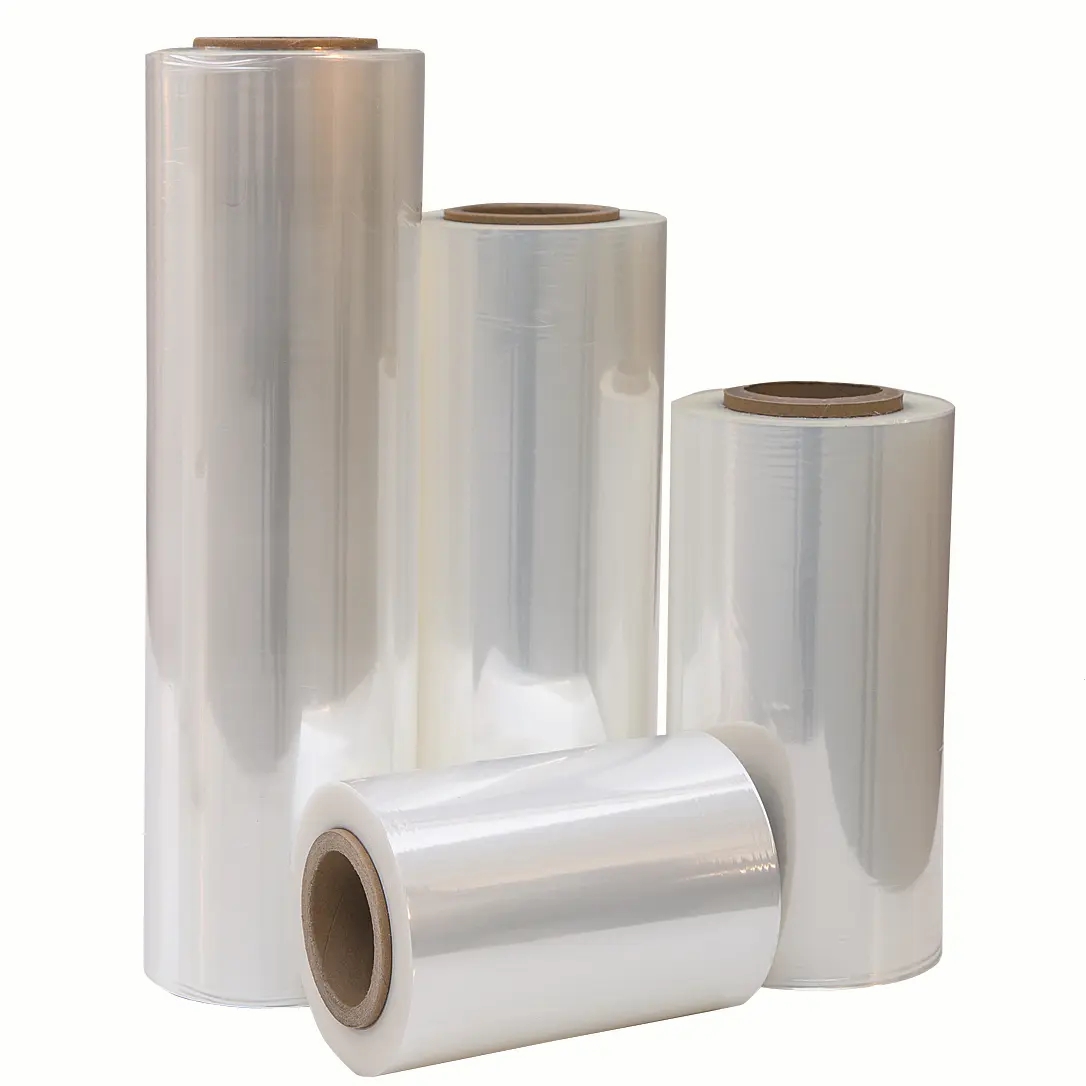
Choosing the right manufacturing process drastically impacts load survival. Manufacturers produce stretch wraps using two primary extrusion methods. Each method yields distinct behavioral properties. You must match the material type directly to your load profile.
Manufacturers create blown film by pushing molten resin through a circular die. They inject air into the center, creating a large bubble. This multidirectional cooling process creates a tough, highly resilient plastic.
Pros: This material offers superior puncture and tear resistance. The cross-directional strength acts like a rip-stop fabric. If a sharp corner punctures the film, the tear will not propagate easily. It serves as the ideal choice for abrasive construction materials and rough lumber.
Cons: The manufacturing process makes the film hazy and dull. It produces a loud screeching noise during unwind. The complex production method also typically results in a higher initial purchase price.
Cast film production involves extruding molten resin through a flat die. The material cools rapidly over large chilled rollers. This rapid cooling aligns the molecules linearly.
Pros: This film boasts excellent memory and stretch capacity. It unwinds quietly, preventing warehouse noise pollution. The rapid cooling ensures high optical clarity. You can easily scan barcodes through multiple layers of cast wrap.
Cons: It offers lower puncture resistance compared to blown variants. Once a tear begins, it travels quickly down the roll. You should reserve this material for uniform, flat-sided heavy loads. Stacked drums and heavy boxed goods respond perfectly to cast wraps.
Many operators confuse different packaging plastics. We must briefly contrast pallet Stretch Film with other common materials. For example, BOPP Film serves an entirely different purpose. Manufacturers typically use BOPP formulations for rigid product overwraps or flexible labels. It lacks the elastic memory required for pallet containment. You cannot stretch it tightly around a 2,000 lb pallet. Always ensure your procurement team orders the correct elastomer-based wrap.
Performance Profile Summary
Characteristic | Blown Process | Cast Process |
|---|---|---|
Puncture Resistance | Exceptionally High | Moderate |
Tear Propagation | Resists tearing | Tears easily once punctured |
Optical Clarity | Hazy / Cloudy | Crystal Clear |
Unwind Noise | Loud | Silent |
Best Application | Sharp, abrasive loads | Flat, uniform heavy loads |
Selecting the optimal wrap requires analyzing precise technical specifications. You cannot rely on guesswork when securing heavy industrial goods. Evaluate your options using these three primary criteria.
Most standard warehouse operations rely on 80-gauge (20.3 microns) film. This thickness handles standard 1,500 lb pallets of toilet paper or dry goods perfectly. However, heavy-duty applications demand much higher structural integrity. You must move beyond the standard baseline.
Evaluate your load carefully to determine the right step up. A 100-gauge wrap offers excellent strength for moderately heavy, uniform pallets. When wrapping cinder blocks or steel coils, you must step up to 115 or 150-gauge films. These ultra-thick options provide maximum tear resistance on highly abrasive loads. Remember, excessive thickness makes manual application incredibly difficult.
Thickness alone does not guarantee security. You must evaluate the elastic recovery of the material. High-performance wraps elongate under tension and then actively try to shrink back. This property is known as film memory.
The film must snap back tightly after elongation. If the plastic merely stretches and stays stretched, the load will shift. Evaluate the yield percentage. A high-yield wrap maintains load rigidity over long transport distances. It continues hugging the pallet tightly even when the truck bounces over rough highways.
Industrial loads often face harsh environmental conditions before or during transit. Standard resins degrade quickly under stress. You should specify chemical additives tailored to your storage environment.
If you store heavy building materials outdoors, request UVI (Ultraviolet Inhibitor) films. UV rays break down standard plastics in weeks, causing catastrophic load failure. For metal transport, specify VCI (Volatile Corrosion Inhibitor) films. Heavy metal loads like automotive parts and steel coils rust easily. VCI wraps release vapor compounds fighting oxidation directly underneath the plastic layer.
Your application method dictates the film's final performance on the pallet. You must match the roll type exactly to your wrapping process. Choosing incorrectly wastes material and endangers workers.
Facilities handling high volumes of heavy loads require automated equipment. Machine-grade films feature specific engineering for semi-automated and fully automated stretch wrappers. These robust rolls withstand extreme mechanical tension.
A quality mechanical wrapper utilizes pre-stretch carriage rollers. These rollers elongate the plastic before it touches the load. Machine-grade materials can achieve 200% to 300%+ stretch yields. This extreme elongation drastically lowers your actual cost-per-load. Although a machine roll costs more initially, the massive increase in yield makes it highly efficient. It also guarantees consistent, high-pressure containment force on every single pallet.
Many facilities still rely on manual application for oversized or custom heavy loads. However, operators face significant physical challenges here. Traditional high-gauge hand wrap causes severe operator fatigue. Pulling a 150-gauge roll tightly around a massive machine block requires immense physical strength.
Common Mistake: Operators often under-stretch thick manual rolls because they tire quickly. This leaves the heavy load dangerously loose.
Best Practice Alternative: Utilize pre-stretched film for heavy manual jobs. Manufacturers stretch this material mechanically at the factory before rolling it onto the core. It requires much less physical exertion to achieve maximum containment force. Your team simply walks around the pallet applying light tension. This drastically reduces workplace injuries and maintains consistent tension across all operator shifts.
Switching to a new heavy-duty wrap introduces variables into your logistics chain. You must manage this transition systematically. Proper testing and auditing prevent sudden shipping failures.
Never transition standard packaging protocols without rigorous real-world validation. A wrap might look secure on the warehouse floor but fail dynamically. You must conduct a formal "tilt test" or transit trial for heavy loads.
During a tilt test, operators incline the wrapped pallet to specific angles. This simulates the extreme G-forces experienced during sudden truck braking. Only approve the material if the heavy cargo remains perfectly locked to the wooden base. For high-value machinery, send a test pallet on a round-trip transit trial. Inspect it carefully upon return for signs of film fatigue or corner tearing.
Even the finest machine-grade wrap will fail if you neglect equipment maintenance. High-performance material relies entirely on the wrapper's mechanics. The pre-stretch carriage rollers do the heavy lifting.
If these rollers become worn, dirty, or improperly geared, they cannot elongate the film correctly. The plastic will either snap constantly during the cycle or apply with zero tension. Schedule monthly preventative maintenance for all heavy-duty automated wrappers. Clean the rubber rollers with isopropyl alcohol to maintain grip.
You must establish a performance baseline to measure real efficiency. Do not guess how much material secures your load. Conduct a precise cut-and-weigh test.
Wrap your standard heavy load using your current material and settings.
Carefully cut all the plastic off the pallet using a safety knife.
Wad the removed plastic together tightly.
Place it on a highly sensitive digital scale and record the exact ounces used.
Repeat this process with the new heavy-duty material. Compare the exact weight of plastic required to achieve proper containment force. This establishes a factual baseline for your operational efficiency metrics.
Securing heavy-duty pallets demands a highly analytical approach to material selection. You cannot compromise on containment force when dealing with extreme weights and abrasive edges. Base your final shortlisting logic on a precise combination of factors. Evaluate your load profile first, noting any sharp corners or irregular weight distributions. Next, align the material with your application equipment, choosing either machine-grade high-yield rolls or ergonomic pre-stretched manual wraps. Finally, account for environmental factors like indoor humidity or outdoor UV exposure.
Take these actionable next steps to improve your load security immediately:
Request sample rolls of 115+ gauge blown film for abrasive loads.
Request sample rolls of pre-stretched cast film for manual uniform loads.
Conduct a rigorous cut-and-weigh efficiency audit with your current wrapping setup.
Perform a tilt test on the newly wrapped sample pallets before committing to a full truckload purchase.
A: A 3,000 lb pallet requires significant structural support. If the load is uniformly shaped and machine-wrapped, a 100 to 115-gauge cast film provides excellent security. If the load has sharp edges or irregular geometry, you must step up to a 115 or 150-gauge blown film to prevent puncture failures during transit.
A: Yes, it performs exceptionally well for heavy loads wrapped manually. Although the material feels thinner, the pre-engaged memory actively tightens around the pallet. It provides excellent containment force for non-sharp heavy loads while saving your warehouse staff from severe physical fatigue.
A: Tearing on corners usually indicates inadequate puncture resistance or excessive application tension. To fix this, switch from cast to blown film, which resists tear propagation. Alternatively, apply heavy-duty cardboard corner boards to the load before wrapping, or slightly reduce the carriage tension on your automated wrapper.
A: Stretch film relies on elastic memory. You stretch it mechanically around a pallet, and it tries to snap back, securing the load through tension. Shrink wrap fits loosely over a product and requires a heat gun or tunnel. The heat causes the plastic to physically shrink and mold to the item.


