
- Home
- Adhesive Tapes
- Self-adhesive Label
- Label Jumbo Roll
- Solutions
- About Us
- News & Insight
- Resources
- Contact Us

Views: 0 Author: Site Editor Publish Time: 2026-09-26 Origin: Site


Treating a self-adhesive label as a simple commodity often leads to costly supply chain failures. You might see labels peeling in cold storage. Sometimes they cause major compliance issues on chemical packaging. The selection process is not just a basic design choice. It is a critical engineering decision. You must balance the application surface, environmental stress, and budget constraints. Navigating the different types requires matching precise materials. You will choose between standard paper versus specialized films. You must also select the correct adhesive formulation for your product's operational lifecycle. You cannot ignore the surrounding regulatory environment. In this guide, we explore how surface tension impacts adhesion. We explain why flexibility matters for squeezable tubes. You will learn how to evaluate synthetic films properly. By the end, you will understand exactly how to specify the perfect label for your operational demands.
Environment Dictates Material: Standard paper labels offer cost-efficiency for dry, short-term use, while synthetic film labels (PP, PET, PE, PVC) are mandatory for moisture, friction, or chemical exposure.
Flexibility vs. Durability: Selecting between film types requires balancing the container's flexibility (e.g., squeezable tubes need PE) with environmental extremes (e.g., high-heat electronics require PET).
Adhesive-to-Surface Matching: The best facestock will fail if the adhesive formulation does not match the surface tension (dyne level) and texture of the packaging.
Pilot Testing is Non-Negotiable: Always validate label performance in real-world application environments—including automated dispensing and storage—before committing to high-volume procurement.
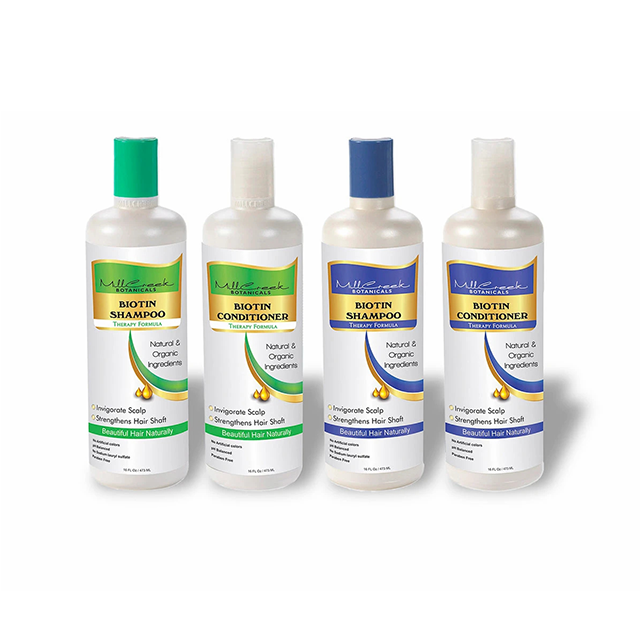
Every packaging engineer knows labels do more than display branding. They function as active components of the product lifecycle. Poor material choices directly harm profitability. We see these failures across three distinct business areas.
Deteriorating labels instantly degrade perceived product quality. Consumers lose brand trust on the retail shelf immediately. Imagine picking up a premium cosmetic bottle. If the edges peel, it feels cheap. A wrinkled surface suggests poor manufacturing standards. You risk losing loyal customers when visual appeal drops. Premium products require premium durability. The label must survive transit, shelf life, and end-user handling. We often see moisture in bathrooms destroying standard paper. Customers notice these details.
Financial and legal consequences hit hard if barcode labels fail. Regulatory labels must not fade, tear, or detach. Goods face instant rejection during transit or storage. Warehouses rely entirely on scannable barcodes. If scanners cannot read a faded print, supply chains halt. Fines for missing safety warnings accumulate quickly. Chemical drums require permanent hazard communication. You cannot afford lost compliance data. It triggers costly recalls and audits.
Uncover the hidden costs of poor material choices. Incorrect material specifications destroy operational efficiency. High-speed packaging lines stall frequently. You might experience severe adhesive oozing. Web snapping halts the entire production floor. Applicator jamming causes extensive downtime. These delays destroy daily production targets. Workers spend hours cleaning sticky residue off application machinery. A cheaper label roll often causes thousands in lost labor. Precision in material selection prevents these catastrophic bottlenecks.
You must understand the foundational differences between material categories. The market divides broadly into paper and synthetics. Each serves distinct operational environments.
Paper remains the most popular choice for specific controlled environments. You will find them everywhere in basic retail.
Best for: Logistics, dry retail packaging, MRP (Maximum Retail Price) stickers, and short-life FMCG products.
Pros: They are highly cost-effective. They offer excellent printability. You will find them widely compatible with standard printing technologies. Using a standard Paper Label keeps initial budgets low.
Limitations: They are highly vulnerable to moisture, tearing, and abrasion. Do not use them in humid environments. Outdoor applications destroy them rapidly. You can add specialized coatings for protection. However, these coatings diminish the initial cost advantage significantly.
You must recognize the trigger points demanding an upgrade. Transitioning from paper to film becomes necessary under stress. Move to synthetics when facing refrigeration or freezing. Chemical exposure demands synthetic resilience. Long-term asset tracking requires materials resisting tear and fade. Squeezable containers also necessitate flexible synthetic solutions. You need durability where standard paper simply dissolves. Synthetics provide a moisture barrier paper cannot match.
Synthetic films dominate high-performance packaging. Selecting the wrong polymer type guarantees failure. We must evaluate their specific molecular behaviors.
Polypropylene dominates the rigid packaging sector. It offers a beautiful finish.
Characteristics: It is exceptionally rigid. It offers excellent clarity for "no-label" looks. You get high moisture and tear resistance.
Primary Uses: Rigid beverage bottles, high-end cosmetics, household cleaners.
Caveat: It completely lacks flexibility. It will wrinkle if applied to squeezable tubes. We call this failure "flagging" when edges pop off.
Polyester handles extreme environmental punishment seamlessly. Engineers specify it for the hardest jobs.
Characteristics: It boasts unmatched tensile strength. It provides high heat resistance and chemical resilience. A PET Film Label survives where others melt.
Primary Uses: Automotive under-the-hood labels, electronics, UL-certified appliance rating plates, long-term asset tracking.
Caveat: It carries a noticeably higher price point. It is vastly over-engineered for standard consumer packaging.
Polyethylene solves the flexibility problem. It moves naturally.
Characteristics: It is highly conformable. A PE Film Label stretches easily alongside its container.
Primary Uses: Squeezable tubes for lotions and shampoos. It works perfectly on contoured or irregular packaging.
Caveat: It offers lower heat resistance compared to PET. It can stretch during high-speed automated application. You must specify the release liner properly to prevent web stretching.
Polyvinyl chloride dominated outdoor applications for decades. It remains incredibly tough.
Characteristics: It is highly durable and weather-resistant. A PVC Film Label conforms exceptionally well to heavily curved surfaces.
Primary Uses: Outdoor equipment, industrial chemical drums, heavy-duty warning labels.
Caveat: It faces intense regulatory scrutiny globally. Environmental directives like RoHS and REACH restrict its use. Many brands actively transition away from PVC toward safer PET or PP alternatives.
You cannot select materials based on appearance alone. The environment dictates the ultimate specification. We rely on strict engineering matrices.
You must assess two distinct temperature ranges. First, consider the application temperature. This is the exact moment when the label is applied. Second, evaluate the service temperature. This represents the environment where the label lives permanently. Blast freezing requires specialized cold-temp adhesives. Autoclaving requires extreme heat resistance. A standard adhesive crystalizes and fails below freezing.
Factor in resistance to product spillage. Oils and aggressive solvents destroy standard ink rapidly. Automotive fluids dissolve basic adhesives. Outdoor UV fading ruins barcode readability. You must require specific laminates or varnishes for outdoor protection. UV light breaks down molecular bonds in standard plastics.
Choose your adhesive based on the end-user interaction. Permanent adhesives provide tamper-evident security. They destroy the label upon removal. Removable adhesives leave no sticky residue on glassware. Repositionable adhesives allow consumers to adjust the sticker. Match the adhesive tack directly to consumer expectations.
Material Comparison Chart
Material Type | Flexibility | Heat Resistance | Primary Application |
|---|---|---|---|
Paper | Low | Low | Logistics, dry retail |
PP (Polypropylene) | Low | Medium | Rigid bottles |
PET (Polyester) | Low | Very High | Electronics, appliances |
PE (Polyethylene) | High | Low | Squeezable tubes |
PVC (Polyvinyl Chloride) | High | Medium | Outdoor, industrial drums |
Procurement teams often rely strictly on data sheets. This approach invites massive implementation risks. You need practical validation strategies.
We constantly see labels fail on low-surface-energy (LSE) plastics. High-density polyethylene (HDPE) repels standard adhesives. The liquid adhesive simply cannot wet out across the surface. It beads up like water on wax. You must specify aggressive, high-tack adhesives to counteract this rejection. Always measure the dyne level of your packaging first. Low dyne levels require specialized adhesive chemistry.
Avoid relying solely on spec sheets. Theory rarely matches factory reality. You must demand physical material samples. Conduct a pilot run on actual production containers. You should mimic worst-case supply chain conditions thoroughly. Freeze the samples. Expose them to friction. Submerge them in water. Only approve the specification after passing physical stress tests. Automated dispensing lines operate at high speeds. Test web strength on the actual machinery.
Criteria for evaluating suppliers matter immensely. Do not choose based on unit price alone.
Look for ISO certifications: These guarantee consistent quality management.
Verify in-house testing capabilities: The vendor should test peel adhesion and tack internally using FINAT standards.
Demand transparent minimum order quantities (MOQs): Hidden limits disrupt cash flow.
Seek compliance-aware engineering support: They should guide you through REACH and RoHS requirements expertly.
Finding the right Self-adhesive Label requires careful alignment. You must align the facestock with the correct adhesive formulation. You must fully understand your operational environment. Paper serves well for dry logistics. Synthetics handle extreme moisture and heat. Document your exact environmental variables before approaching any vendor. Define your application temperatures clearly. Note any chemical exposure risks. Encourage your engineering team to request a technical consultation. Order a custom sample pack today. Test these materials directly on your specific packaging to ensure perfect performance.
A: No. PP is rigid and will likely wrinkle or detach ("flag") when squeezed. A PE film label is the correct choice for flexible containers.
A: Not entirely. While not waterproof, paper labels can be treated with varnishes or laminates to resist condensation for short periods. However, for true water immersion, film labels are absolutely required.
A: You likely used a standard room-temperature adhesive. Cold storage requires a specialized "cold-temp" or "all-temp" adhesive. These are formulated specifically to bond effectively at sub-zero temperatures.
A: Depending on the application, PET is the standard upgrade for durability and high heat resistance. Alternatively, PE offers a highly conformable and more environmentally compliant option for flexible packaging needs.


