
- Home
- Adhesive Tapes
- Self-adhesive Label
- Label Jumbo Roll
- Solutions
- About Us
- News & Insight
- Resources
- Contact Us

Views: 0 Author: Site Editor Publish Time: 2026-08-11 Origin: Site


Hanging decor without reaching for a hammer feels like a modern necessity. You want beautiful walls. You dread the idea of driving nails. Yet, nail-free mounting often ends in disaster. Heavy frames crash in the middle of the night, shattering glass everywhere. Alternatively, aggressive adhesives grip too hard. They rip chunks of drywall away during move-out. Renters lose their security deposits over these mistakes. Homeowners face annoying weekend repair projects. Students in dorms strictly need damage-free solutions. Meanwhile, contractors and homeowners often require permanent, heavy-duty holds. Which path should you choose? This guide cuts through flashy marketing claims. We objectively evaluate both solutions for your specific project. We analyze adhesive chemistry, surface compatibility, load-bearing limits, and removal realities. By understanding how these products truly behave, you can hang your favorite items securely. More importantly, you avoid expensive wall repairs later.
Command Strips are the undisputed choice for temporary mounting on smooth, painted drywall where structural preservation and clean removal are the primary success criteria.
Double Sided Tape (specifically heavy-duty variants) offers superior shear strength, weather resistance, and versatility for permanent installations or uneven surfaces.
Marketing claims like "traceless" or "damage-free" for certain double-sided tapes (like nano tape) often fail on standard painted drywall.
Proper surface preparation (isopropyl alcohol) dictates the success or failure of both adhesive types more than the brand itself.
We must stop viewing mounting adhesives as a single, universal product. They represent an entire category of specialized chemical tools. Manufacturers engineer distinct formulas for highly specific applications. If you choose the wrong chemistry for your project, failure becomes inevitable.
Do not frame this category as a one-size-fits-all solution. Different carrier materials and adhesive coatings serve completely different purposes in the real world.
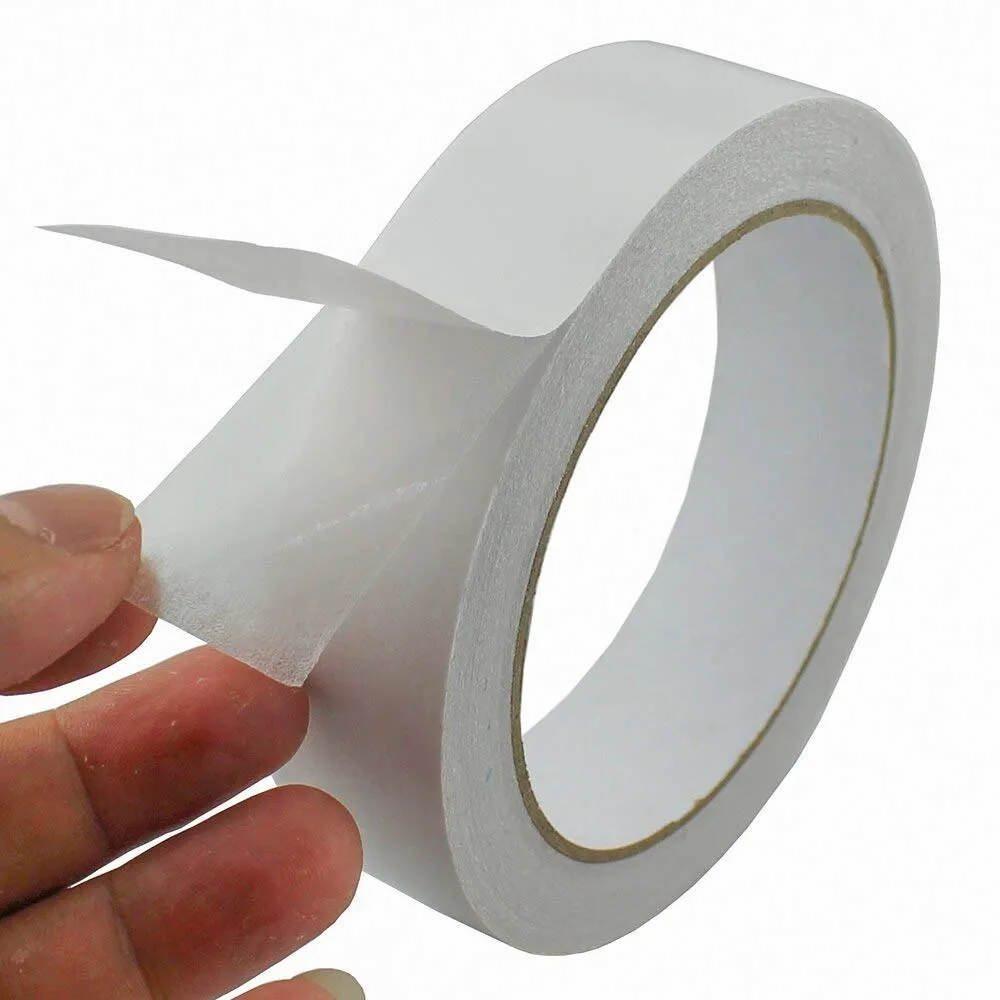
Tissue Tape: You use this for lightweight, flush applications. It features a thin non-woven carrier. It handles paper, simple crafting, and light office duties perfectly. The thin profile prevents bulky gaps between materials. If you need a reliable bond for thin items, Tissue Tape offers excellent precision.
Foam Tape: This variant features a spongy, compressible core. It fills microscopic gaps on textured walls or uneven baseboards. You get extremely high initial tack. For rigid but uneven surfaces, Foam Tape acts as a flexible, shock-absorbing bridge between materials.
Nano Acrylic Tape: Think of this as a heavy-duty, transparent gel. It lacks a traditional foam core. Instead, it relies on advanced cross-linking acrylics. It delivers massive shear strength. However, it bonds aggressively to porous materials. When you require a nearly invisible but industrial-strength hold, Nano Acrylic Tape performs exceptionally well on smooth glass and metal.
For general household repairs and mounting, standard Double Sided Tape blends versatility and ease of use. You can cut custom lengths easily for various projects.
Command products rely on ingenious stretch-release mechanics. They utilize a cohesive elastomer backing. The adhesive grips tightly under normal downward shear stress. It holds your picture frames firmly in place.
However, pulling the tab changes the physical dynamics. It stretches the elastomer parallel to the wall. This horizontal stretching forces the adhesive bond to break cleanly. It removes surface tension completely without damaging the underlying paint layer. You essentially pull the adhesive off itself rather than tearing it away from the wall.
Adhesives behave differently under varying physical stresses and distinct climates. You must align your product choice with your environment.
Command strips use strict, highly conservative weight ratings. Large heavy-duty hooks max out around 16 pounds. They perform admirably under static, straight-down loads. If you hang a standard framed mirror, they handle the shear stress perfectly.
Conversely, industrial tapes offer massive capacities. Structural acrylic tapes easily hold 30 pounds or more. The total load capacity depends heavily on your applied surface area. More tape equals more gripping power. If you need to mount a heavy power strip upside down under a desk, industrial tape provides the necessary strength. Command strips often fail under this specific type of peel stress.
Consider the classic bathroom shower caddy dilemma. Standard Command strips fail quickly in high-humidity zones. Hot steam degrades their elastomer backing rapidly. The strips lose their grip, sending your shampoo bottles crashing down. You must purchase their specific water-resistant lines for wet environments.
Heavy-duty acrylic tape thrives in these harsh conditions. It maintains structural integrity despite extreme heat or intense UV exposure. Moisture rarely compromises a fully cured acrylic bond. This resilience makes acrylic tape the only viable choice for outdoor mounting, mailboxes, or automotive trims. It withstands freezing winters and scorching summers effortlessly.
Adhesive Performance Comparison Chart
Adhesive Category | Max Load Capacity (Approx.) | Moisture Resistance | Best Operating Environment |
|---|---|---|---|
Standard Command Strips | Up to 16 lbs (Large) | Low | Indoor, climate-controlled |
Water-Resistant Command | Up to 15 lbs | Medium | Indoor bathrooms, kitchens |
Acrylic Tape | 30+ lbs (Area dependent) | High | Indoor & Outdoor extremes |
Polyurethane Foam Tape | Medium to High | Medium | Uneven or textured indoor walls |
Matching the adhesive perfectly to your wall material dictates your ultimate success. The wrong combination ruins drywall instantly.
We must conduct a realistic risk assessment regarding painted drywall. Drywall consists of compressed gypsum covered in a heavy paper skin. Paint adheres to this paper skin.
Avoid using heavy-duty nano tape on standard painted drywall. Marketers frequently label them "traceless." In reality, they form an incredibly aggressive bond. They grip stronger than the paint binds to the drywall paper. When you attempt removal, the tape pulls the paint and paper right off the gypsum core. You face severe tearing.
Therefore, Command strips remain the absolute necessary standard for rental properties. Dormitories essentially mandate them. They protect the fragile paint-to-paper interface perfectly when removed correctly.
Rigid, non-porous surfaces change the rules completely. Here, heavy-duty tapes dominate the field. You do not worry about surface damage on solid steel or thick glass. You simply demand maximum adhesion.
Brick and cinderblock present a unique challenge. Command strips fail miserably on these surfaces. They cannot adhere to highly porous or rough textures. You strictly need a thick foam core tape. The foam compresses directly into the brick's deep pores. It establishes a secure physical grip that flat strips cannot achieve.
Even the best engineered adhesives fail when users ignore basic installation chemistry. Understanding common mistakes prevents unexpected disasters.
The most common user error involves impatience. You cannot simply stick a hook to the wall, hang a heavy coat, and walk away. You must let the adhesive cure properly.
Both stretch-release strips and heavy-duty tapes need significant time. The adhesive polymers must flow into microscopic surface pores to establish a strong grip. Always wait at least 60 minutes before applying any weight. Applying immediate weight causes micro-tears in the uncured bond. The item will inevitably fall a few hours later.
Skipping the rubbing alcohol wipe-down guarantees failure. Modern walls accumulate invisible oils, cooking grease, and dust. If you stick tape to a dusty wall, it merely holds the dust. It never touches the actual paint.
Wiping the area meticulously with isopropyl alcohol ensures proper contact. It evaporates quickly without leaving residues. Do not use standard household surface cleaners. They often leave slick, oily residues behind. Skipping the alcohol step renders any manufacturer load-capacity claims completely null.
Time alters physical adhesive properties. Command strips left untouched on a wall for multiple years often dry out. The specialized elastomer loses its critical elasticity.
When you attempt to pull the tab five years later, it simply snaps off in your hand. This ruins the built-in "damage-free" removal mechanism. You then face a stubborn plastic hook glued firmly to your wall. Removing it safely requires heat and extreme patience. Heavy-duty tapes also harden over time, making removal equally tedious.
You need clear, objective guidelines to make the right purchase. Review these specific scenarios before deciding on your mounting strategy.
You rent an apartment or live in a strict university dorm room. You face severe penalties for wall damage.
You plan to hang lightweight framed art, canvas prints, or acoustic foam panels.
You mount items on smooth, fully cured painted drywall.
You anticipate moving, redecorating, or repositioning the items within one to two years.
You hang items that experience purely vertical weight stress (shear stress).
Your installation is entirely permanent. Examples include smart home control panels, under-cabinet lighting strips, or decorative baseboard trim.
Your environment sits outdoors, experiences high humidity, or suffers wild seasonal temperature swings.
You mount heavy objects directly to brick, rough wood, bare metal, or glass.
You need to mount items underneath a surface (like a desk), which creates heavy peel stress.
You require custom lengths for long objects. Tape on a roll provides superior scalability. It delivers better cost-efficiency per inch than buying expensive pre-cut strips.
There is no universal "better" option between these two mounting giants. You only find the right formulation for your specific surface and intended duration. Command products win the temporary indoor category. Heavy-duty tapes dominate permanent and outdoor installations.
Before purchasing your mounting supplies, follow these actionable next steps:
Assess your wall material carefully. Determine if it is porous drywall or rigid tile.
Weigh your item accurately using a household scale. Do not guess the weight.
Clean your intended surface thoroughly using pure isopropyl alcohol and let it air dry.
Apply your chosen adhesive, press firmly, and observe the strict 60-minute curing rule.
Always review the exact product specifications on the packaging. Match your item's weight against the stated load limits based on your chosen path. A few minutes of preparation guarantees a secure hold and pristine walls.
A: Command strips require a brand-new adhesive strip for the plastic hook. You cannot reuse the stretched adhesive. Some nano acrylic tapes claim washability and reuse. However, their efficacy drops significantly with each wash. Dirt micro-particles permanently reduce their grip over time. You should always use fresh tape for secure holds.
A: No. They require maximum surface contact to function properly. Textured paint or "popcorn" walls create tiny air gaps, preventing a secure bond. You strictly need a compressible foam tape to handle textured or highly uneven walls effectively.
A: First, use a hairdryer on medium heat to soften the adhesive gently. Next, take dental floss or strong fishing line. Slide it behind the object and slowly saw through the foam or acrylic core. Finally, use a citrus-based adhesive remover to clean up any remaining sticky residue.


