
- Home
- Adhesive Tapes
- Self-adhesive Label
- Label Jumbo Roll
- Solutions
- About Us
- News & Insight
- Resources
- Contact Us

Views: 0 Author: Site Editor Publish Time: 2026-09-21 Origin: Site


Label failure—whether peeling, flagging, or bubbling—is rarely just a cosmetic flaw. It represents a serious packaging compliance risk and a direct threat to brand integrity. When consumers see a deteriorating package, they often question the quality of the product inside. Selecting a reliable self-adhesive label requires careful balancing. You must weigh substrate flexibility against adhesive chemistry. Furthermore, the physical properties of your application surface dictate this choice entirely.
Navigating these variables demands a robust evaluation framework. Relying on guesswork often leads to costly recalls and production delays. This guide outlines how to match label materials to specific surface types and environmental conditions reliably. You will learn the physics behind adhesion, how surface energy impacts glue spread, and why container flexibility matters. By understanding these core principles, you can secure seamless application and lasting performance.
Applying the wrong label material to a product creates immediate ripple effects across your supply chain. When materials clash, operational costs skyrocket. You face expensive rework, manual relabeling, and disrupted production schedules. Barcode unreadability poses another major risk. If a label wrinkles or bubbles over a barcode, automated logistics scanners cannot read it. This leads to rejected shipments and vendor chargebacks.
Beyond logistics, damaged labels harm brand perception. A premium lotion bottle loses its appeal when the label corners lift on retail shelves. Consumers associate packaging quality directly with product quality. A failing label suggests a cheap or compromised product inside.
Establishing clear success criteria prevents these issues. A successful label application meets three specific benchmarks. First, it shows zero edge lift after a 72-hour curing period. Second, it maintains permanent adhesion under normal use conditions. (If your product requires a removable label, it must peel cleanly without leaving sticky residue). Third, the label must facilitate seamless mechanical dispensing. High-speed applicator machines demand consistent liner tension and proper adhesive flow.
Many procurement teams fall into a common trap. They assume a "universal adhesive" exists. They buy one standard label and apply it across glass jars, recycled corrugated board, and treated plastics. This assumption is a massive risk factor. Different surfaces possess entirely different microscopic profiles and chemical properties. A strong bond on glass often fails completely on a textured plastic container. You must tailor your material choices to the specific application environment.
To choose correctly, you need to understand the physical interaction between the adhesive and the container. We evaluate surfaces across three primary dimensions: surface energy, surface texture, and container flexibility.
Surface energy dictates how well an adhesive can spread out—or "wet out"—across a material. We divide materials into High Surface Energy (HSE) and Low Surface Energy (LSE) categories.
HSE materials act like a magnet for adhesives. Glass, aluminum, and polycarbonate fall into this group. Because they have high surface energy, the liquid adhesive flows smoothly across the surface. This creates a tight, immediate bond. You can typically use standard acrylic adhesives on HSE surfaces without issue.
LSE materials present a much tougher challenge. High-density polyethylene (HDPE) and low-density polyethylene (LDPE) plastics are notorious LSE surfaces. They actively repel liquids. If you use a standard adhesive here, it will bead up instead of spreading flat. For LSE plastics, you must specify specialized, aggressive tack adhesives. Rubber-based adhesives or highly modified acrylics are usually necessary to secure a lasting bond.
Texture determines the actual contact area between the label and the container. Smooth surfaces, like polished glass or standard PET bottles, maximize adhesive contact. The adhesive touches 100% of the target area, requiring only a thin, standard coat weight.
Rough or porous surfaces behave differently. Wood, frosted glass, and recycled cardboard feature microscopic peaks and valleys. A standard adhesive layer only touches the high peaks, leaving air gaps underneath. This weak bond easily fails. To conquer rough textures, you need a thicker adhesive layer. A higher coat weight fills in the microscopic valleys, locking the label securely in place.
The shape and rigidness of your container strictly limit your material options. Consider whether you are labeling a rigid glass jar, a tightly curved lip balm tube, or a squeezable shampoo bottle.
When you apply a label to a curved or flexible surface, the label material naturally wants to return to its flat state. We call this "memory." If you place a rigid label on a tightly curved radius, the material's memory fights the adhesive. Eventually, the edges lift. Squeezable containers add another stress factor. The label must stretch and recover repeatedly alongside the bottle. Selecting the right face stock is the only way to survive these dynamic movements.
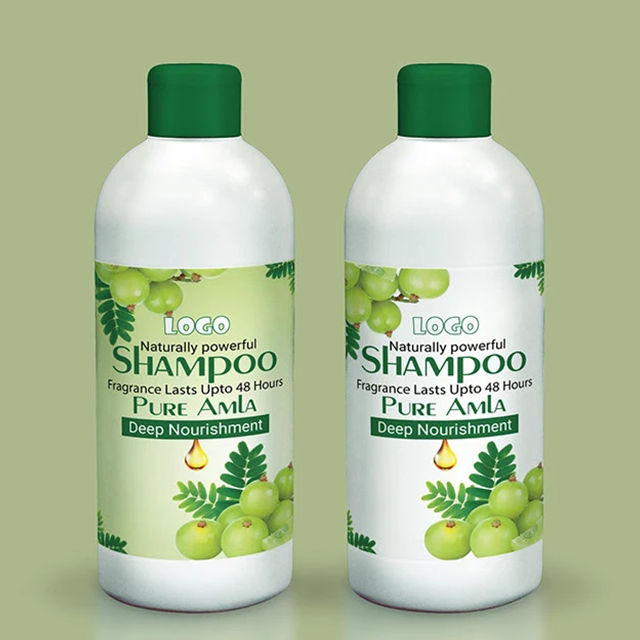
Your choice of face stock must harmonize with the container's physical properties. Each synthetic material offers unique advantages for specific applications. Understanding these profiles prevents costly specification errors.
The PE Film Label is the industry standard for flexible packaging. It is highly conformable and stretches easily.
Brands increasingly favor the Transparent PE Label for modern, minimalist packaging designs.
For applications where flexibility is less critical but durability matters, the PP Synthetic Paper Label excels.
Industrial and technical environments demand extreme resilience. The PET Film Label delivers unmatched durability.
Historically, the PVC Film Label served as the go-to choice for complex shapes.
Table: Substrate Material Comparison Guide
| Material Type | Flexibility | Durability/Heat Resistance | Ideal Application Surface | Not Recommended For |
|---|---|---|---|---|
| PE Film | High | Low to Medium | Squeezable bottles, tubes | High-heat environments |
| Transparent PE | High | Low to Medium | Clear squeezable packaging | Rigid industrial parts |
| PP Synthetic | Low (Semi-rigid) | Medium | Rigid jars, food tubs | Squeezable containers |
| PET Film | Very Low (Rigid) | Very High | Electronics, automotive parts | Curved or flexible bottles |
| PVC Film | Very High | High | Deep curves, outdoor gear | Eco-conscious packaging |
A perfectly matched label and surface will still fail if you ignore environmental conditions. Temperature, moisture, and chemical exposure fundamentally alter how adhesives behave. You must evaluate the entire lifecycle of the product.
Many procurement teams confuse application temperature and service temperature. This mistake guarantees label failure.
The application temperature is the exact temperature of the room and the container at the moment the label is applied. Adhesives require specific conditions to achieve their "initial tack." If you apply a standard label in a near-freezing meatpacking plant, the adhesive crystallizes. It will never bond. You need an adhesive formulated specifically for cold-temperature application.
The service temperature covers the extremes the product endures during its lifespan. A vial might be labeled at standard room temperature, but later endure blast freezing or steam autoclaving. The adhesive must survive these shifts after it has fully cured. Always specify both temperatures to your label manufacturer.
Water and chemicals quickly destroy standard paper labels and weaken basic adhesives. Evaluate the exact conditions your product faces. Shampoo bottles sit in hot, steamy showers. Industrial chemical drums face oil spills and solvent drips. Beverage bottles deal with heavy condensation when moving from a cold fridge to a warm room.
For these environments, paper is useless. You must use waterproof synthetic substrates. Additionally, consider applying protective over-laminates. A clear laminate layer seals the printed ink and protects the face stock from harsh industrial solvents or continuous moisture exposure.
The environment where you store your unapplied label rolls matters immensely. Self-adhesive labels are sensitive chemical products. Storing them in uncontrolled humidity or extreme heat degrades them long before application.
High heat can cause the adhesive to pre-cure or ooze out the sides of the roll. Excessive humidity causes paper liners to warp and swell, leading to immediate jams in your application machinery. Keep your label inventory in a climate-controlled environment, ideally between 68°F and 72°F (20°C - 22°C) and 50% relative humidity.
Once you understand the physics and environmental demands, you can move toward procurement. Selecting the right materials requires a structured validation process. Do not order full production runs based on datasheets alone.
How will you apply these labels? Manual application allows for slightly more margin of error regarding liner strength. However, high-speed automated dispensers require precise engineering.
Automated machines pull the label web at intense speeds. If the backing liner is too weak, the web snaps. This causes massive production downtime. For high-speed lines, you might need a strong PET release liner instead of standard glassine paper. Discuss your machinery speeds with your supplier to match the liner to your equipment.
Never rely on a single option. Procure sample rolls of two or three shortlisted materials. For example, if you are launching a new lotion bottle, request samples of a standard PE film and a specialized conformable PP blend. Apply them both to empty prototype bottles. Feeling the material interact with your specific container design reveals nuances datasheets hide.
Real-world testing is your final defense against packaging failures. Follow this practical framework to validate your shortlisted materials:
Achieving a flawless, lasting bond requires looking beyond simple aesthetics. A reliable self-adhesive label is a highly engineered composite technology. The face material, the adhesive formulation, and the release liner must all work together perfectly. More importantly, they must align entirely with the physical surface, the container flexibility, and the environmental lifecycle of the product.
Decision-makers must prioritize surface physics over upfront unit costs. Choosing an inappropriate, cheap rigid material for a squeezable bottle guarantees failure. It leads to rejected batches, damaged brand reputation, and frantic operational fixes. By systematically evaluating surface energy, testing for environmental extremes, and executing the 72-hour validation process, you protect your brand. You ensure your packaging looks exactly as intended from the manufacturing floor to the consumer's hands.
A: Flagging usually happens when you apply a rigid material (like PET) to a curved surface. The material's natural stiffness fights the adhesive bond. It can also occur if you use a standard adhesive on Low Surface Energy (LSE) plastics. Always match flexible films to curved containers and use aggressive adhesives for LSE plastics.
A: We strongly advise against it. Polypropylene (PP) is a semi-rigid material. When a consumer squeezes the bottle, the label cannot stretch. It will quickly wrinkle, bubble, or completely delaminate. A flexible polyethylene film is the correct choice for squeezable applications.
A: You need a specialized "cold-temperature" or "all-temp" adhesive. Standard acrylic adhesives crystallize and fail in freezing conditions. Specialized cold adhesives are formulated to cut through surface moisture and cure properly at sub-zero temperatures. Always ensure the surface is as dry as possible during initial application.
A: A polyester (PET) film paired with a heavy-duty solvent acrylic adhesive offers the best extreme performance. This combination resists prolonged UV exposure, harsh chemicals, and high heat. Adding a clear protective over-laminate further shields the printed graphics from industrial wear and tear.


