
- Home
- Adhesive Tapes
- Self-adhesive Label
- Label Jumbo Roll
- Solutions
- About Us
- News & Insight
- Resources
- Contact Us

Views: 0 Author: Site Editor Publish Time: 2026-09-01 Origin: Site


Shipping damage and rejected loads rarely happen by accident. They stem primarily from inadequate load containment rather than rough handling alone. You cannot control every bump on the road. You can, however, control how securely your products travel. When pallets shift or topple, the financial impact ripples through your entire supply chain. Freight claims consume valuable administrative time and drain resources.
Standardizing your pallet wrapping process reduces material waste immediately. It mitigates transit risks and directly protects your bottom line. Applying the correct gauge of Stretch Film ensures pallets arrive intact. This guide details evidence-based wrapping techniques for optimal security. You will learn specific material selection criteria for different load profiles. We also cover practical considerations for scaling your packaging operations. By implementing these strategies, you can minimize product loss and streamline your warehouse efficiency.
Optimal load containment requires matching the stretch film type (cast vs. blown) and gauge to specific load profiles (A, B, or C loads).
Correct manual wrapping relies on structural techniques: anchoring to the pallet, maintaining a 50% overlap, and achieving consistent tension.
Evaluating film costs should be based on "cost per load wrapped" rather than "price per roll."
Scaling from manual to machine wrapping reduces film consumption by up to 50% through consistent pre-stretching.
Unpacking the financial impact of load shifting is crucial for warehouse managers. When products slide during transit, businesses lose money rapidly. Product damage leads to immediate revenue loss and unhappy customers. It also creates severe safety hazards for warehouse workers. Damaged loads often collapse when forklift operators try to move them. Falling boxes can cause serious workplace injuries.
Reverse logistics costs also pile up quickly when loads fail. Replacing damaged goods requires extra shipping fees. It consumes valuable labor hours for repacking and restocking. To prevent this, you must change your success criteria.
Focus must shift away from merely wrapping a pallet tightly. Instead, you should target optimal containment force. This metric measures the total squeeze applied to the load. Proper containment force holds everything together like a solid block. It prevents individual boxes from vibrating loose during transit.
Many warehouses fall into a dangerous material waste trap. Common mistakes include:
Over-wrapping pallets to compensate for poor technique.
Using the wrong film gauge for the specific load profile.
Applying too many layers without actual stretch force.
Failing to anchor the plastic to the wooden pallet base.
These bad habits lead to hidden operational inflation. You end up buying more material than necessary. The extra layers do not increase stability. They simply waste money and plastic.
Choosing the proper material requires analyzing your specific loads. Cast and blown films serve different operational needs. Cast film offers high clarity and quiet release. It stretches easily and unwinds smoothly from the roll. You should use cast film for standard A and B load profiles. A-profile loads look like perfect cubes. B-profile loads have minor irregularities or slight punctures. Cast film handles these uniform shapes perfectly.
Blown film behaves differently on the warehouse floor. It provides exceptionally high tear resistance and toughness. Unwinding blown film produces a loud, distinct noise. This material handles heavy or irregularly shaped loads. You need it for C-profile loads containing sharp corners. C-profiles often include protruding parts or unboxed machinery.
Gauges and microns dictate material thickness. You must match the thickness to your load weight. Standardizing your choice prevents sudden load failure. Standard gauges range widely depending on application needs.
Table 1: Stretch Film Gauge Decision Matrix
Film Gauge | Micron Equivalent | Ideal Load Weight | Best Load Profile |
|---|---|---|---|
37 - 47 Gauge | 9 - 12 Microns | Up to 1,000 lbs | Uniform A-Profile |
60 - 70 Gauge | 15 - 18 Microns | 1,000 - 1,800 lbs | Standard B-Profile |
80 Gauge (Industry Standard) | 20 Microns | 1,800 - 2,500 lbs | Mixed B & C-Profile |
100+ Gauge | 25+ Microns | Over 2,500 lbs | Heavy C-Profile (Sharp edges) |
Pre-palletizing preparation matters just as much as wrapping. Structural integrity always starts at the box level. You must ensure individual cartons remain securely sealed. Using high-quality Adhesive Tapes prevents box flaps from popping open. Open flaps create uneven surfaces. These uneven surfaces often puncture outer wraps during transit.
We recommend securing heavy cartons using durable BOPP Tape. Sometimes, operations utilize BOPP Film for specialized bundle wrapping before palletizing. Properly sealed boxes stack evenly on the wooden base. Flat surfaces allow the outer wrap to grip securely.
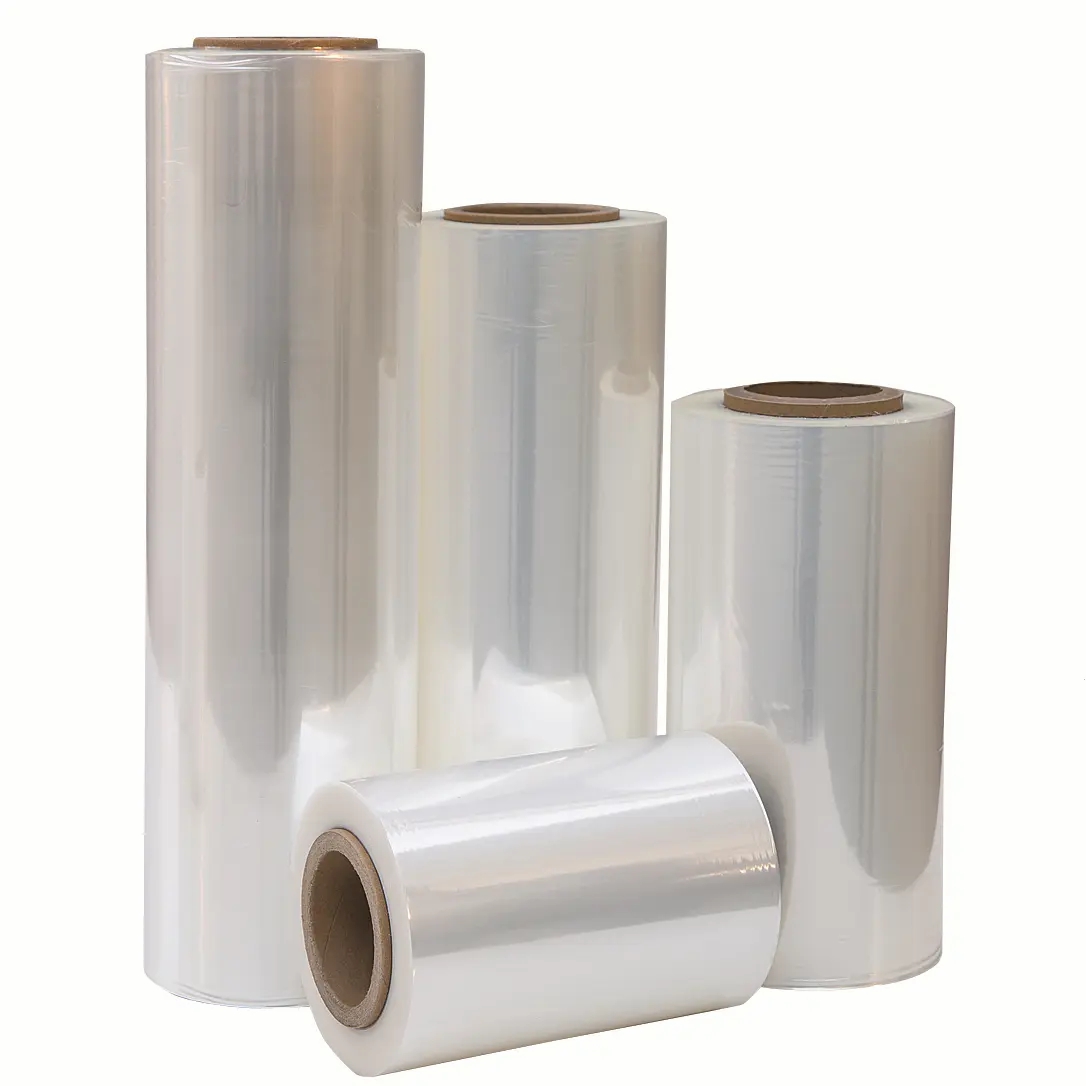
Correct manual wrapping requires consistency and structural technique. Following a strict process prevents costly human error. You must train your staff on these foundational steps.
Base Anchoring: You must start by securing the film. Thread the material through a bottom pallet corner. Tie a firm knot around the wooden block. This step prevents the load from sliding off the wood. Skipping this causes the entire stack to shift during transit. You must anchor the plastic to the wood, not just the boxes.
The 50% Overlap Rule: Always wrap from the bottom up. Overlap the previous layer by exactly 50 percent. This technique creates a unified structural web. It distributes the containment force evenly across all the boxes. A proper overlap ensures no weak spots exist in the middle.
Top-Tying and Downward Securing: The top tier remains the most vulnerable section. Once you reach the top, wrap it twice. Let the film extend slightly over the top edges. Then, wrap back down toward the base. This downward motion locks the load securely in place. It prevents the top boxes from swaying.
Tension Control: You must apply adequate stretch during application. Pull firmly around the corners to lock them. However, avoid pulling too hard on flat sides. Excessive tension causes micro-tears in the plastic. These tiny rips compromise the film's elastic memory. They eventually reduce the overall containment force and cause snapping.
Even experienced teams face wrapping challenges daily. A major issue is the tail hazard. Operators sometimes leave unsecured film tails hanging. These loose ends create severe safety and operational risks. They easily get caught in automated conveyor belts. Forklift wheels can run over them and rip the wrap entirely. You must properly tuck and seal all ends. Press the final tail flat against the pallet before moving it.
Crushing vulnerabilities represent another significant danger. Some operators apply high-gauge film using excessive tension. Lightweight or fragile boxes cannot withstand this extreme pressure. The corners crush inward, compromising the whole stack. The load loses its structural integrity immediately. You should match your tension to the product fragility.
Environmental degradation also threatens long-term load security. Standard plastics degrade under certain harsh conditions. UV exposure weakens the material during outdoor storage. The plastic becomes brittle and loses its stretch. Temperature fluctuations cause serious problems in logistics. Cold storage environments make standard plastics rigid. The wrap can easily snap during winter transit. You must factor these environmental conditions into your material choice.
Manual wrapping works well for smaller operations. However, growing businesses eventually hit a strict volume threshold. The tipping point typically sits at 15 to 20 pallets per day. Beyond this limit, manual wrapping becomes a severe bottleneck. Workers tire quickly, and wrapping consistency drops drastically. Peak seasons make this bottleneck even worse.
Machine wrapping drastically improves overall material efficiency. Automated stretch wrappers utilize motorized pre-stretch carriages. They stretch the plastic up to 200 or 300 percent before application. This capability drastically lowers the film cost per load. It maximizes the yield from every single roll. Hand wrapping only achieves about 10 to 20 percent stretch.
Chart 1: Comparison of Hand Wrapping vs. Machine Wrapping
Feature | Hand Wrapping | Machine Wrapping |
|---|---|---|
Volume Capacity | Under 15 pallets/day | 20+ pallets/day |
Pre-Stretch Yield | 10% - 20% | 200% - 300% |
Containment Force | Inconsistent (Operator dependent) | Highly Consistent (Programmed) |
Ergonomic Risk | High (Bending, pulling) | Low (Automated process) |
Consistency and ergonomics drive the strongest business value here. Machines eliminate manual operator fatigue entirely. They reduce repetitive strain injuries and back problems in the workplace. Most importantly, they ensure mathematically consistent containment force. Every pallet receives the exact same squeeze regardless of the operator. You eliminate the variable of human exhaustion.
Purchasing packaging materials requires highly strategic thinking. Many buyers make a critical error when evaluating supplier costs. They only look at the upfront price per roll. You should base evaluations on the cost per load wrapped. A cheaper roll often yields fewer wrapped pallets. It might tear easily or lack proper stretch capacity. You end up using twice as much material to achieve stability.
Vendor consolidation offers massive operational and financial benefits. Sourcing multiple items from one capable supplier simplifies everything. You can order Stretch Film alongside secondary materials easily. Group them with your required Packaging Solutions for better volume pricing. Streamlining vendors reduces administrative overhead and freight costs.
Before signing a bulk contract, demand a proof of concept. Buyers must insist on real-world transit testing. Conduct film audits in your actual warehouse environment. Wrap your heaviest loads and test their stability. A cut-and-weigh test reveals exactly how much plastic you use. This data proves the supplier can meet your standards.
Secure shipping relies on the intersection of several critical factors. Correct material selection prevents baseline transit failures. Standardized application ensures consistent results across all warehouse shifts. Measurable containment force guarantees the load will survive the journey. You cannot afford to guess when wrapping valuable pallets. Concrete data and proven technique must drive your process.
Your next action should be a thorough warehouse audit. Inspect your currently wrapped pallet loads carefully. Look for signs of film breaks or minor load shifting. Identify specific areas for immediate material optimization. Train your staff extensively on the 50 percent overlap rule. Teach them to anchor the film to the wood properly. By standardizing your approach today, you eliminate future shipping damage.
A: The sticky side, or cling layer, must face inward against the load. Cast films usually have cling on one side. Blown films often have double-sided cling. Facing the cling layer inward ensures the material grips the boxes tightly. It also prevents wrapped pallets from sticking to each other during transit.
A: Yes, it is fully recyclable. Most films fall under the LLDPE or Category 4 recycling classification. However, you cannot mix it with standard curbside recycling. Facilities require clean, dry plastic free from labels and tape. You must partner with specialized commercial recycling centers to process these materials properly.
A: These materials function differently. Shrink wrap requires heat application. The heat causes the plastic to shrink tightly around a product. We use it mostly for retail packaging. Stretch film relies on elastic memory. You stretch it mechanically around a pallet. It tries to return to its original size, creating containment force.
A: You should avoid arbitrary wrapping counts. A general rule of thumb requires three bottom wraps, two upward layers, and three top wraps. However, the exact number depends on your load profile and material gauge. Heavy C-profile loads require more layers than uniform A-profile loads. Always measure your containment force.


