
- Home
- Adhesive Tapes
- Self-adhesive Label
- Label Jumbo Roll
- Solutions
- About Us
- News & Insight
- Resources
- Contact Us


Views: 0 Author: Site Editor Publish Time: 2026-06-24 Origin: Site


Label failure instantly compromises brand perception. It also ruins strict packaging compliance. Wrinkling, tearing, or adhesive degradation poses a significant business risk. Poor aesthetics quickly erode consumer trust on the retail shelf. Buyers judge product quality by its exterior. Polypropylene (PP) and Polyethylene (PE) are both synthetic, moisture-resistant polymers. However, their distinct physical properties dictate entirely different use cases. You cannot simply swap them blindly. Doing so risks catastrophic packaging failure. Understanding these nuances saves time. It heavily preserves product integrity. This guide breaks down the structural differences between PP and PE. We help procurement and packaging teams make optimal choices. You can match the right film to specific container types seamlessly. You will learn exactly how application environments dictate your final material choice. Mechanical stress plays a huge role. We show you how to navigate it.
PP film labels offer superior rigidity, tear resistance, and clarity, making them ideal for rigid containers and high-speed automated dispensing.
PE film labels provide unmatched flexibility and conformability, making them the mandatory choice for squeezable packaging where PP would crease or peel.
Durability is contextual: PP survives friction and tension best, while PE survives continuous manipulation and squeezing best.
Application speed matters: PP’s stiffness allows for faster, more reliable machine application compared to the softer PE.
Polypropylene often undergoes a stretching process during manufacturing. Engineers pull the polymer in two directions. This creates Biaxially Oriented Polypropylene (BOPP). A PP Film Label possesses remarkable tensile strength. Its core trait is extreme stiffness. The material strongly resists stretching under mechanical tension. This rigidity enables highly efficient processing on automated production lines. Additionally, BOPP offers incredible optical clarity. Brands frequently leverage it to achieve a highly transparent "no-label look." This visual effect works perfectly on clear glass or transparent plastic bottles.
Polyethylene represents a completely different polymer structure. Its core traits are malleability and stretchability. PE features a noticeably softer texture compared to BOPP. It easily conforms to irregular shapes. The material dynamically moves alongside the container's surface. When you press or bend the packaging, PE yields entirely. It stretches smoothly instead of snapping or tearing. This pliability makes it highly forgiving on complex container geometries.
You must recognize one fundamental rule. Neither material is objectively "better" overall. Material survival depends entirely on the substrate. Environmental stressors also dictate performance outcomes. A stiff polymer fails on a soft tube. A soft polymer causes headaches on high-speed rigid lines. You must match the physical chemistry to the specific real-world application.
Assuming high tensile strength equals universal durability.
Ignoring the physical rigidity of the target container.
Selecting materials based solely on visual clarity without testing flexibility.
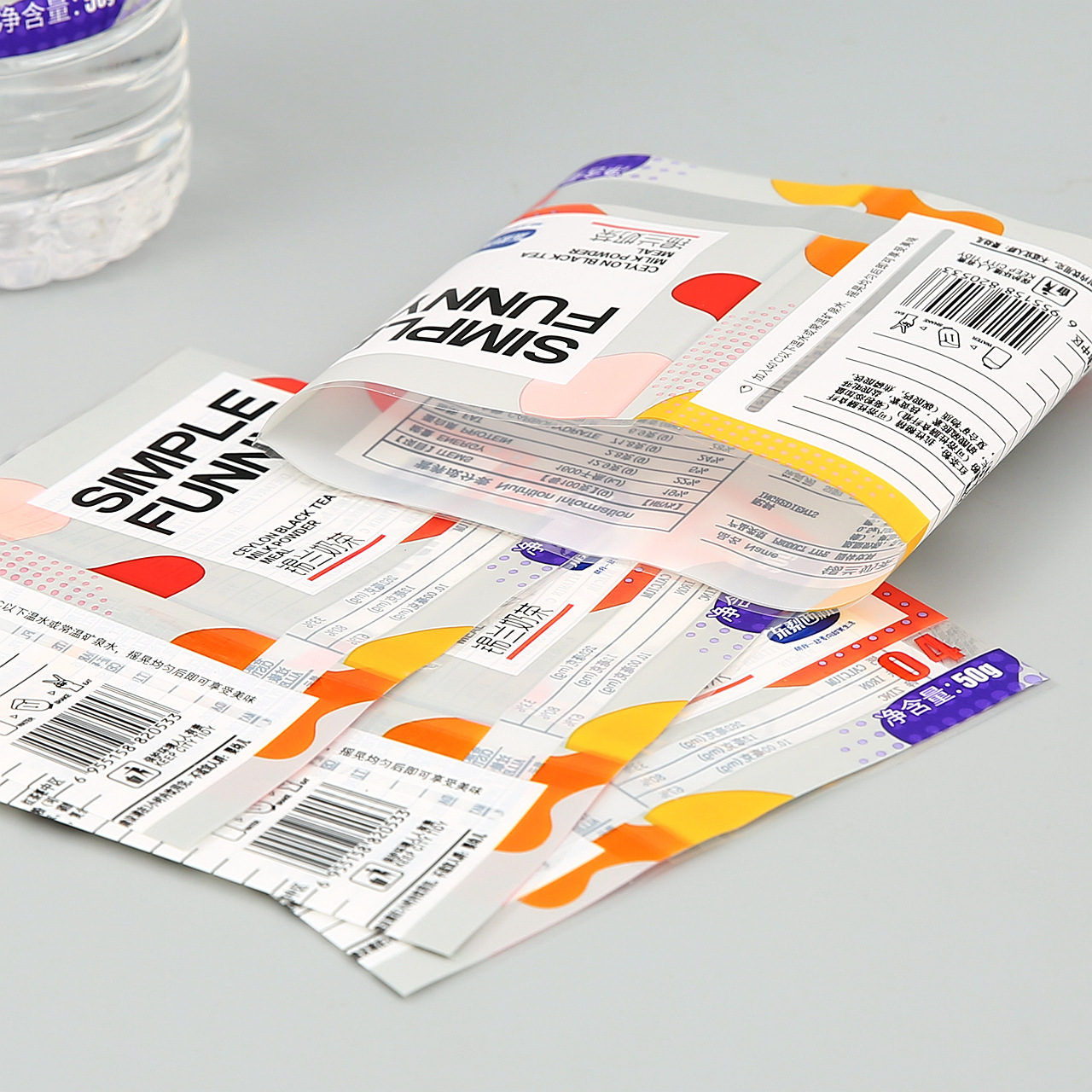
These two polymers handle mechanical damage very differently. PP proves highly resistant to stretching. It rarely tears in one or both directions if oriented as BOPP. It withstands intense shipping friction effortlessly. Heavy pallets rubbing together will not easily destroy a BOPP graphic. PE behaves differently under stress. It remains highly susceptible to stretching out of shape. If you pull it hard, the graphic distorts permanently. However, PE heavily resists puncturing. Its pliable nature absorbs sharp impacts beautifully. An object might stretch the PE slightly, but it will rarely pierce the surface.
Both polymers provide excellent baseline waterproofing. They easily outperform standard paper labels in wet environments. However, their chemical resistance profiles diverge. PP delivers superior resistance to acidic spills. It survives aggressive chemical exposure far better. Manufacturers routinely use it for harsh household cleaners. Industrial chemicals also require PP face stocks. PE handles mild moisture well. Yet, harsh industrial solvents can degrade its structural integrity much faster.
Thermal environments heavily influence polymer performance. PP maintains its structural integrity brilliantly in higher heat environments. It resists melting or warping near warm industrial equipment. Hot-fill manufacturing processes pair exceptionally well with BOPP. Conversely, PE performs exceptionally well in cold environments. It dominates the freezer aisle. Freezing temperatures never turn PE brittle. It retains full flexibility even below zero degrees. PP can occasionally crack if subjected to extreme deep-freezing.
Physical Trait | PP Film (Polypropylene) | PE Film (Polyethylene) |
|---|---|---|
Tear Resistance | Excellent (Will not snap easily) | Moderate (Prone to stretching) |
Puncture Defense | Moderate (Can shatter if pierced) | Excellent (Absorbs sharp impacts) |
Chemical Resistance | High (Survives industrial acids) | Moderate (Degrades under harsh solvents) |
Heat Tolerance | High (Excellent for hot-fill) | Low (May warp under high heat) |
Cold Tolerance | Moderate (Can become brittle) | High (Perfect for freezers) |
You must specify PP for fundamentally rigid applications. It forms an ideal pairing for glass bottles. Hard plastic jars and aluminum cans also require this stiffness. Flat surfaces handle BOPP perfectly. The stiff polymer lays completely flat without bubbling. However, a major risk exists here. Applying PP to a flexible container causes immediate failure. The industry calls this phenomenon "flagging". The stiff material remembers its flat shape. The edges peel up forcefully from curved, soft surfaces. If a user squeezes the bottle, permanent creasing occurs. The graphic wrinkles and never recovers.
You must specify PE for highly flexible applications. It remains absolutely mandatory for cosmetic tubes. Squeezable condiment bottles require it entirely. Personal care products, like shampoo bottles, rely on it heavily. The PE material flexes harmoniously with the container. It stretches outward as pressure builds. Afterward, it returns to its original shape seamlessly. This elastic memory prevents graphic distortion. More importantly, it stops the adhesive bond from degrading. The edges stay locked down tightly despite continuous manipulation.
Tap the container. If it yields under light pressure, default to PE.
Measure the circumference. Tight curves on small vials often cause stiff PP to flag.
Consider the product lifecycle. A lotion tube sees daily squeezing. It demands maximum conformability.
Application speed deeply impacts your material choice. PP’s inherent rigidity makes it highly efficient. High-speed automated applicators love stiff webs. The material moves rapidly through the rollers. It dispenses crisply onto the passing bottles. PE poses distinct operational challenges here. Its softness can cause severe tension issues. The web might stretch or snap under mechanical pulling. Jamming frequently occurs on high-speed lines. Operators must implement proper web tension control. Alternatively, you must specify thicker backing liners. A heavier liner provides temporary rigidity during the dispensing phase.
Durability stretches far beyond the face stock alone. You must match the right adhesive to the container. Surface energy dictates adhesive success. High-density polyethylene (HDPE) bottles present unique bonding challenges. They exhibit very low surface energy. The surface behaves like a non-stick frying pan. Applying a soft PE graphic to an HDPE bottle requires specific adhesive formulations. Standard adhesives simply slide off. You must demand high-tack rubber or modified acrylic adhesives. This prevents catastrophic drop-off later.
Printing techniques require specific surface preparations. You must compare top-coating requirements carefully. Flexographic printing needs distinct treatments compared to digital printing. Untreated polymers reject wet ink entirely. The ink simply beads up and wipes away. Proper top-coating ensures the ink anchors deeply. It guarantees the design does not scuff off. Heavy handling during transit destroys poorly anchored inks. Always verify your top-coat compatibility with your specific press technology.
Executing a proper Film Label Comparison prevents expensive missteps. Procurement teams should follow a standardized evaluation framework. This logic removes guesswork from the purchasing process.
Evaluate the end-user experience first. Will the consumer squeeze, twist, or compress the packaging? Think about ketchup bottles or sunscreen tubes. If the answer is yes, you must select PE. If the container remains rigid throughout its life, choose PP. This single question eliminates most failures.
Examine your visual branding goals. Do you need ultra-clear transparency? Are metallic or holographic finishes necessary? PP and BOPP generally yield sharper clarity. They lack the slight haziness sometimes found in softer plastics. They deliver premium luxury finishes flawlessly. They reflect light evenly due to their smooth, rigid surfaces.
Analyze your production line conditions. Are you labeling containers at extremely high speeds? Do you operate in cold-fill or hot-fill environments? Align your material stiffness and temperature ratings accordingly. Fast lines demand stiff webs. Cold lines favor flexible, frost-resistant polymers. Match the chemistry to your factory floor.
Never skip the physical testing phase. Always mandate real-world physical run-tests. Push both materials through your specific applicator machinery. Do this long before authorizing a full-scale rollout. A theoretical match means nothing without physical verification.
Run an unprinted roll through the applicator at maximum speed.
Monitor web tension and look for snapping or stretching.
Apply tags to filled containers, not just empty ones.
Perform a 48-hour adhesion test to check for edge lifting.
Selecting the right polymer dictates your packaging success. Choose a PP film label for ultimate tensile strength. It guarantees pristine clarity and flawless performance on rigid surfaces. It dominates high-speed automated lines seamlessly. Conversely, choose a PE label when flexibility remains non-negotiable. It stretches and recovers beautifully. It survives endless squeezing without edge lifting or creasing.
Your next steps involve strict physical testing. Advise your procurement team to request detailed material spec sheets. Ask your converter for unprinted sample rolls. Test mandrel hold specifically. This reveals how well the adhesive grips curved surfaces. Finally, conduct rigorous squeeze-recovery tests. Replicate real-world user conditions entirely. Proper upfront testing guarantees a flawless product launch.
A: No. The rigidity of PP will cause it to crease, wrinkle, and eventually lift at the edges (flagging) after repeated squeezing.
A: PP (specifically BOPP) is generally more cost-effective and widely produced for mass applications, but total cost depends on adhesives, liners, and volume. Using cheaper PP on a squeezable bottle will cost more in returns and brand damage.
A: While both can use standard acrylic or rubber-based adhesives, the choice depends heavily on the container's material (glass vs. plastic) and the storage environment (freezer vs. shower), rather than just the film type.
A: Yes, but compatibility matters. Matching a PP label to a PP container or a PE label to a PE container aids in the recycling process without requiring label separation.


