
- Home
- Adhesive Tapes
- Self-adhesive Label
- Label Jumbo Roll
- Solutions
- About Us
- News & Insight
- Resources
- Contact Us


Views: 0 Author: Site Editor Publish Time: 2026-06-15 Origin: Site


Selecting the wrong packaging tag creates immediate financial strain for any business. You might overpay for unnecessary durability. Conversely, you could face expensive hidden fees when tags fail in the field. Peeling stickers require immediate manual reprints. Unreadable barcodes halt fast-paced logistics lines instantly. Damaged packaging harms consumer trust deeply. We constantly see companies struggle here. They try to balance upfront savings against long-term reliability.
You must look beyond the initial price per roll. A standard tag costs much less upfront. Synthetic alternatives demand significantly higher initial budgets. However, evaluating true value requires a comprehensive operational cost model. You must judge materials based strictly on your actual application environments.
This guide breaks down the financial realities of different tags. You will learn how to compare baseline prices accurately. We will uncover the hidden operational expenses of material failure. Finally, you will discover a clear decision framework. This structured approach helps you choose the perfect option for your unique operational needs.
A standard paper label is significantly cheaper upfront but carries high replacement costs in high-moisture or high-friction environments.
Synthetic labels require a higher initial investment but yield positive ROI through durability, compliance adherence, and reduced product return rates.
The optimal decision relies on a three-point evaluation: product lifespan, environmental exposure, and regulatory requirements.
Testing physical samples in real-world application conditions is a mandatory risk-mitigation step before bulk procurement.
Let us establish the fundamental price differences first. Direct price discrepancies matter greatly when ordering at scale. You can expect a standard Paper Label to cost significantly less initially. On average, entry-level synthetics cost 30% to 50% more per 1,000 units. Premium synthetics push this price discrepancy even higher.
Defining these materials clarifies the massive cost gaps. Paper options include matte, gloss, and thermal transfer variants. They remain highly cost-effective globally. Printers source them easily. Commercial printers love them because they accept ink beautifully. They run through fast printing presses seamlessly.
Synthetic options serve a completely different purpose. They include Polypropylene (BOPP), polyester (PET), and vinyl. Manufacturers create them from petroleum-based plastics. This complex chemical manufacturing process drives up the base cost. The raw materials simply cost more to produce and refine.
Production variables also sway your final invoice. Adhesive types drastically alter the baseline cost of any order.
Removable Adhesives: These often cost more due to specialized formulation. They must stick well but peel cleanly later.
Aggressive Permanent Adhesives: Engineers design these for rough surfaces. They require heavy coat weights. This increases the total price.
Standard Permanent Adhesives: This represents the most economical choice for basic packaging.
Finishes add another layer of expense to your order. Adding a thick protective laminate increases the price significantly. Applying a simple liquid varnish offers a cheaper alternative. These finishing factors impact both material categories heavily.
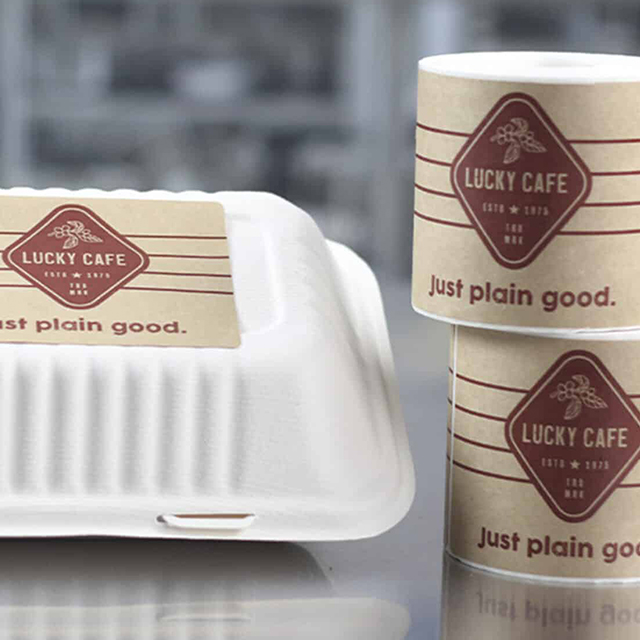
Cheap upfront prices often hide massive operational penalties down the line. Labor and reprinting penalties destroy profit margins quickly. Imagine a warehouse worker peeling off torn tags. They must manually re-label and re-print replacements for each failed item. This wasted time costs you expensive hourly wages. You also consume extra printer ribbons and blank stock unnecessarily.
Supply chain and compliance risks escalate these losses rapidly. Thermal tags often fade or tear during rough transit. Unreadable barcodes cause immediate scanning failures at massive distribution centers. Major retailers enforce strict vendor routing guides. They penalize suppliers heavily for unreadable barcodes. A single torn sticker might trigger a large chargeback fee per box. These small fees accumulate rapidly across large shipments. They wipe out any savings you gained initially.
Brand degradation represents the most insidious hidden cost. You lose repeat business when products look terrible upon arrival. Consumer-facing packaging must arrive looking absolutely pristine. A boutique skincare brand cannot afford peeling stickers. If customers receive items with oil-stained or disintegrated stickers, they lose trust. They will view your brand as a cheap alternative. Evaluating this lost revenue is critical. You must account for lost customer lifetime value.
Standard paper excels in specific, highly controlled environments. High-volume, low-stress applications represent the absolute optimal use cases. Think about short-term logistics operations. Shipping boxes and internal inventory management systems rely heavily on basic tags. Warehouses with climate-controlled HVAC systems protect these materials perfectly.
Dry retail goods also fit this profile perfectly. Cottage food products thrive here. They simply must avoid refrigeration or high-humidity areas. You should also use paper for temporary product identification. Promotional stickers rarely need long-term durability. They only need to look good for a few weeks on a store shelf.
However, you must respect strict performance limitations. Paper has zero tolerance for prolonged moisture. Chemical exposure destroys the porous surface instantly. Heavy abrasion will scrape away the printed ink quickly.
Marketers often advertise "water-resistant coated paper" to buyers. This is usually a slight exaggeration. A quick splash might roll off the surface. However, sustained condensation will ruin these coatings. The moisture seeps into the unprotected edges eventually. The material will warp and peel.
You can maximize value with smart finishing choices. Pair your standard options with a cost-effective varnish.
Gloss Varnish: Adds a slight shine and minor scuff resistance.
Matte Varnish: Provides a smooth finish and reduces glaring reflections.
UV Varnish: Cures instantly under ultraviolet light for a slightly harder shell.
These varnishes slightly extend the lifespan of the print. They protect against minor scuffs. They do this without approaching the high cost of synthetics.
Synthetic options always demand a premium price. However, paying two or three times more upfront is often fiscally responsible. It prevents catastrophic downstream failures.
Mandatory use cases strictly dictate this premium investment. Cold storage and blast freezing environments require extreme synthetics. High condensation will destroy standard options before the product even ships. Health, beauty, and CBD products demand similar durability. They face constant exposure to strong essential oils. Consumers handle them daily in moist environments like steamy bathrooms. The oils break down cheap adhesives instantly.
Outdoor equipment also requires serious synthetic resilience. Chemical drums need tags that resist harsh industrial solvents like isopropyl alcohol. UL-compliant asset tracking demands a highly reliable Label Material. It must survive extreme physical conditions for years.
You can expect clear, positive financial outcomes from this investment. Synthetics offer zero degradation over a multi-year lifespan. They provide superior chemical and oil resistance consistently. They maintain scannability through harsh global shipping routes. This reliability easily justifies the higher initial expenditure.
Performance Feature | Standard Paper | Synthetic (BOPP/PET) |
|---|---|---|
Upfront Cost Level | Very Low | Moderate to High |
Moisture Resistance | Poor (unless heavily coated) | Excellent (Fully Waterproof) |
Tear Resistance | Low (Tears easily) | High to Untearable |
Oil/Chemical Resistance | None (Stains immediately) | High (Repels harsh solvents) |
Optimal Application | Shipping, Dry Goods, Logistics | Bath & Body, Cold Storage, Assets |
Choosing the right option requires a highly systematic approach. Follow these four crucial steps to eliminate expensive guesswork.
Document the exact lifecycle of your tag thoroughly. Track temperature fluctuations from initial production to the end-user. Identify heavy friction points during automated shipping. Note any potential chemical exposure. Consider if the product sits under harsh UV light in retail windows. Machine oils in a manufacturing plant will destroy standard materials rapidly.
Differentiate clearly between short-term and long-term needs. A tag surviving a simple three-day shipping route needs minimal protection. Conversely, a five-year outdoor asset tag requires premium synthetic durability. Match the material to the exact expected lifespan. Over-engineering wastes money. Under-engineering causes critical product failures.
Calculate your economic tipping point accurately. Premium paper tags with heavy laminates often become expensive at high volumes. At a certain production scale, upgrading makes logical sense. Transitioning to an entry-level synthetic BOPP becomes economically viable. Run the math on batches of 10,000 units or more. You might find synthetics actually save money at larger scales.
Purchasing small sample runs is a non-negotiable step. Never skip this phase. Test adhesion on your actual product containers. A glass bottle behaves differently than a squeezable plastic tube. Verify durability in real-world conditions. Perform the freezer test. Leave the item in sub-zero temperatures for forty-eight hours. Perform the scuff test. Rub the printed surface vigorously fifty times. This physical proof prevents catastrophic bulk procurement errors.
Let us summarize the core cost-versus-durability trade-off. You must balance upfront costs against necessary long-term durability. Standard tags save money initially. However, they fail miserably in harsh conditions. Synthetics cost more out of the gate. Yet, they protect your brand and operational efficiency over time.
Never evaluate your options in a vacuum. Let your product's operational environment dictate the baseline requirements. Real-world conditions matter far more than a simple price sheet. Do not let upfront savings blind you to operational realities.
Take immediate action to secure the right fit. Request a material sample kit today. Consult with a packaging engineer to audit your comprehensive operational costs. Test multiple options on your specific SKUs. This rigorous approach ensures lasting success for your product line.
A: No, they are not truly waterproof. A glossy finish provides a splash-proof coating. It repels quick drops of water. However, prolonged exposure or sustained condensation will soak the edges. The base will eventually absorb moisture, warp, and degrade completely.
A: Both materials work well, but they require entirely different ribbons. Paper pairs best with affordable wax ribbons. Synthetics require wax-resin or full-resin ribbons to anchor the ink properly. Standard thermal paper does not use ribbons at all. It relies on direct heat.
A: Yes. Within the synthetic category, BOPP is the most cost-effective entry point. Vinyl generally costs more due to its extreme flexibility and thickness. Polyester (PET) is the most expensive option. It offers the highest heat resistance and supreme tensile strength.
A: Yes, the physical printer remains the exact same. However, you must change your ribbon. Printing on paper requires a standard wax ribbon. Using an expensive resin ribbon on paper wastes money. Always adjust your printhead darkness settings when switching substrates.


