
- Home
- Adhesive Tapes
- Self-adhesive Label
- Label Jumbo Roll
- Solutions
- About Us
- News & Insight
- Resources
- Contact Us

Views: 0 Author: Site Editor Publish Time: 2026-09-22 Origin: Site


Excessive wrapping material usage inflates your consumable costs. It also compromises corporate sustainability targets. Unchecked usage often masks underlying load stability issues within the warehouse. You might think adding more layers automatically ensures a secure pallet. However, more plastic does not mean better protection. Transitioning from guesswork to a data-driven wrapping process helps secure loads reliably. It minimizes material waste simultaneously.
We must strike the right balance to achieve operational efficiency. Effective wrapping relies heavily on proper containment force and superior film capability. It also requires strict operator or machine consistency. In this comprehensive guide, you will learn how to optimize your wrapping protocols. We will cover selecting the right materials and calibrating your machines. We will also help you standardize your manual techniques. You will discover actionable steps to significantly reduce plastic waste. These targeted methods streamline your overall shipping operations.
Right-sizing film gauge and type prevents over-wrapping and material failure.
Optimizing wrapper machine parameters (like pre-stretch tension) can reduce film usage by up to 50% compared to uncalibrated baselines.
Standardizing operator training for manual wrapping eliminates inconsistent application and hazardous load failures.
Consolidating packaging solutions—from stretch films to adhesive tapes—with a consultative supplier lowers Total Cost of Ownership (TCO).
Defining the true cost of waste requires a close look at your daily operations. Material costs of excess plastic add up incredibly fast. Every redundant wrap around a pallet silently drains your packaging budget. Labor time spent over-wrapping also damages warehouse productivity. Operators waste precious minutes looping pallets more times than necessary. Furthermore, unoptimized plastic usage creates a hefty environmental tax. Facilities generate massive amounts of non-recyclable waste when they lack precise wrapping standards.
Many warehouse managers fall victim to the load containment fallacy. We frequently encounter the dangerous misconception that more film equals a safer load. Excess wraps applied without proper tension provide zero additional containment force. They merely add dead weight to the pallet. The film must stretch to its designed yield point to act like a rubber band. This elastic memory is what actually holds the boxes together during transit. Wrapping a pallet ten times loosely is far less effective than wrapping it three times with proper tension.
Establishing clear success criteria is vital for any optimization project. You must establish a strict baseline for your current film usage per pallet. To do this, weigh a fully wrapped pallet, cut the plastic off, and weigh the discarded plastic. This gives you a precise baseline weight. Next, define target containment forces required for transit compliance. Industry standards often dictate specific holding forces depending on the load weight. Once you measure the baseline, you can introduce high-performance Stretch Film to achieve those exact targets using less overall mass.
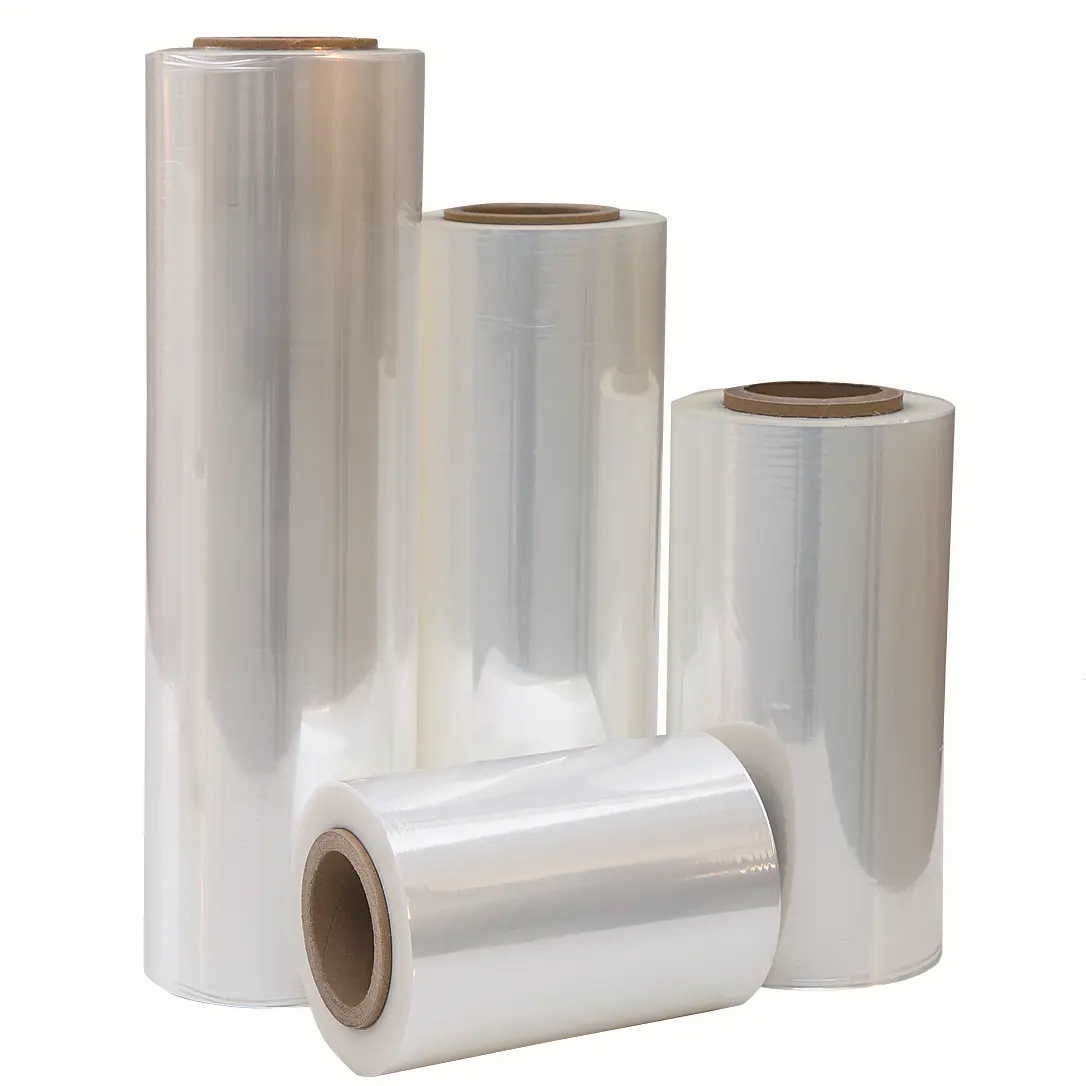
Evaluating film categories is the first step toward reducing waste. Standard cast film unrolls quietly and offers excellent clarity for barcode scanning. Blown film is tougher and highly puncture-resistant, though it applies loudly. Pre-stretched film comes already stretched from the factory. You must choose the category based strictly on your load profiles. Heavy or rigid loads often require durable blown films. Light or fragile loads benefit immensely from cast or pre-stretched alternatives.
Moving away from a "one size fits all" procurement habit saves money. You need a gauge optimization framework to guide your purchasing decisions. Guidelines for matching film thickness to pallet weight prevent both material failure and gross overspending. Using an 80-gauge wrap on a light, uniformly stacked pallet is highly inefficient. Conversely, using a thin gauge on heavy pallets with sharp corners guarantees mid-transit tearing.
Load Profile & Weight | Recommended Gauge (Microns) | Ideal Application Scenario |
|---|---|---|
Light Loads (Under 1,000 lbs) | 37 - 47 Gauge (9 - 12 µm) | Uniform boxes, fragile items, no sharp edges. |
Standard Loads (1,000 - 2,000 lbs) | 60 - 70 Gauge (15 - 18 µm) | Mixed grocery pallets, standard distribution. |
Heavy Loads (2,000 - 3,000 lbs) | 80 - 90 Gauge (20 - 23 µm) | Industrial parts, liquids, slightly irregular shapes. |
Extreme Loads (Over 3,000 lbs) | 100+ Gauge (25+ µm) | Bricks, steel parts, sharp corners, heavy machinery. |
You should carefully analyze the benefits of pre-stretched versus standard options. Pre-stretched options drastically reduce the physical exertion required in manual wrapping. Operators do not need to pull as hard to achieve load stability. This inherently limits the volume of plastic applied per load. The roll is lighter, reducing operator fatigue and workplace injury claims. It also guarantees a consistent application regardless of who wraps the pallet.
Integration with secondary packaging also drives down material consumption. You can easily secure lightweight boxes using BOPP Film before wrapping the entire pallet. Alternatively, applying strong strips of BOPP Tape provides excellent initial stabilization. This strategy reduces the dependency on thick outer plastics. When the boxes are already stabilized, you need significantly fewer wraps to secure the final load.
Maximizing your pre-stretch capabilities yields more wrapped pallets per roll. Many facilities run their machines at a factory default of 150% stretch. Modern wrapping equipment can often stretch high-performance plastics to 250% or even 300%. Pushing the carriage gears to these higher percentages elongates the plastic further. This means one meter of plastic off the roll becomes three meters on the pallet. You instantly cut your material consumption without sacrificing any load integrity.
Tension control and overlapping settings demand precise calibration. You must define evidence-based overlapping ratios rather than using arbitrary settings. Industry best practices typically recommend a 20% to 30% overlap between layers. Anything higher leads directly to material redundancy. Operators sometimes crank up the overlap setting when they notice load shifting. This masks the real issue of inadequate tension. You should increase the secondary tension force rather than overlapping the plastic excessively.
Routine equipment audits prevent sudden spikes in material usage. Neglecting sensor calibration directly causes uneven tension and excessive feeding. Dirty photo-eyes misread the top of the pallet, forcing the machine to wrap empty air. Damaged carriage rollers snag the plastic and cause micro-tears. We recommend scheduling monthly preventative maintenance on all wrapper machines. Calibrate the load cell sensors frequently. Clean the pre-stretch rollers with approved solvents to maintain optimal grip.
Manual wrapping remains highly prevalent in many distribution centers. Implementing a strict bottom-to-top protocol ensures structural integrity without redundant loops. You must outline a standard operating procedure for anchoring the material properly.
Anchor the plastic securely by tying it to the base of the wooden pallet.
Wrap the base at least twice, ensuring the plastic grips both the wood and the bottom boxes.
Walk forward while pulling tightly, spiraling upward with a strict 20-30% overlap.
Apply two overlapping layers at the very top to lock the upper boxes in place.
Spiral back down to the bottom and cut the plastic, smoothing the tail against the load.
Tension consistency presents a massive challenge during manual applications. We must discuss the physical limitations of manual wrapping. Human operators naturally fatigue over an eight-hour shift. Their pulling force drops significantly by the end of the day. To maintain consistent tension without relying on excessive layers, employ specialized manual dispensers. Dispensers with built-in braking mechanisms apply mechanical tension. This ensures the plastic stretches properly even if the operator is tired.
Operator training transforms warehouse efficiency and safety. You must emphasize the importance of training warehouse staff properly. Teach them to wrap for containment force rather than visual thickness. A common mistake is judging a pallet's security by how opaque the plastic looks. Clarify that clear, tightly stretched layers offer vastly superior holding power. Conduct quarterly retraining sessions. Emphasize ergonomics to prevent back strain while securing the bottom layers.
Addressing film tearing and punctures eliminates the most visible form of waste. Operators throw away massive amounts of plastic when a roll snaps mid-wrap. You must identify root causes such as incorrect gauge selection for sharp-edged pallets. Excessive machine tension also causes immediate snapping. Sometimes, hidden burrs or sticky residues on the wrapping carriage slice the material. Inspect the carriage door and rollers daily for any sharp imperfections.
Preventing film sticking and tangling saves countless rolls from the dumpster. Improper storage conditions degrade the built-in adhesive properties. Storing rolls in extreme heat causes the layers to fuse together. Freezing temperatures make the material brittle. Solutions include maintaining a climate-controlled storage area.
Best Practice: Store rolls upright in environments between 60°F and 80°F.
Best Practice: Keep rolls away from direct sunlight and warehouse loading dock doors.
Common Mistake: Leaving rolls resting horizontally on warehouse racks, which flattens the roll and causes uneven unwinding.
Common Mistake: Tossing partial rolls onto concrete floors, which damages the edges and guarantees future tearing.
Safety and compliance risks escalate when operations lack standardization. We use real-world operational realities to highlight these dangers. Tearing mid-wrap frustrates operators and leads to discarded waste. Worse, it results in compromised load safety. A poorly secured pallet will shift during transit or collapse inside the truck. Discarded plastic tails cluttering the warehouse floor also create severe tripping hazards. Forklifts can suck loose tails into their axles, causing expensive mechanical breakdowns.
Choosing the right partner goes far beyond the price-per-roll metric. You need a strict framework for evaluating suppliers based on actual value. Assess their ability to conduct on-site wrap audits. A valuable supplier will visit your facility, weigh your pallets, and measure containment force. They should recommend cost-saving configurations based on complex data, not just try to sell you the cheapest roll. An analytical approach guarantees long-term material cost reductions.
Portfolio breadth provides a significant logistical advantage. Source your materials alongside industrial Adhesive Tapes from a single vendor. Partnering with a provider of comprehensive Packaging Solutions streamlines your entire procurement process. It also ensures material compatibility across the board. You spend less time managing multiple invoices and more time optimizing your warehouse throughput.
Your shortlisting logic should focus on proven performance and measurable savings. Establish strict criteria for requesting samples. Never buy a truckload of material without running a trial pallet test. Wrap a typical load, subject it to simulated transit forces, and calculate the exact material usage. Compare these metrics against your current baseline. This data-driven approach highlights projected cost reductions perfectly. Once the trial proves successful, finalize your procurement contract with absolute confidence.
Reducing wrapping waste is a strict operational discipline. It requires selecting the right material and keeping your equipment perfectly calibrated. It also demands well-trained personnel who understand containment mechanics. Moving away from arbitrary wrapping habits toward data-driven procedures guarantees a secure load. You protect your products while simultaneously hitting crucial sustainability targets.
Take immediate action by conducting a baseline audit of your current pallets. Weigh the discarded plastic from a typical load today. Compare that weight against modern industry benchmarks. This single exercise will instantly reveal significant cost-saving opportunities hidden within your daily operations. Equip your team with the right tools, enforce standard operating procedures, and watch your consumable expenses drop.
A: Weigh a fully wrapped pallet to establish a baseline. Then, cut the film off the pallet entirely. Weigh the discarded film on a highly precise scale. Compare this exact weight to industry benchmarks for your specific load type. If your film weight significantly exceeds the benchmark, you are wasting material through over-wrapping or using incorrect gauges.
A: Yes, it certainly can. Thinner, high-performance films maintain excellent containment force with significantly less mass. However, you must match the gauge correctly to your specific load profile. Using a thin gauge on heavy pallets with sharp corners will cause tearing, ultimately costing you more in waste and transit damages.
A: Tearing usually stems from excessive carriage tension or pushing the pre-stretch ratio beyond the material's limit. Damaged or dirty rollers can also snag the plastic. Additionally, you might be using a film with insufficient puncture resistance for a pallet containing sharp or irregular edges.
A: A facility should transition when they process more than 15 to 20 pallets per day. At this volume, the labor costs of manual wrapping and the material waste from inconsistent tension quickly exceed the investment cost of a semi-automatic machine. The ROI is usually realized within a few months.


