
- Home
- Adhesive Tapes
- Self-adhesive Label
- Label Jumbo Roll
- Solutions
- About Us
- News & Insight
- Resources
- Contact Us


Views: 0 Author: Site Editor Publish Time: 2026-02-13 Origin: Site


In the global flexible packaging and label printing industry, material selection plays a critical role in product performance, durability, cost efficiency, and sustainability. Among the most widely used plastic films are BOPP Film and PET film. Both materials serve overlapping markets, including food packaging, label printing, lamination, and industrial applications. However, understanding the differences between BOPP Film and PET film is essential for manufacturers, converters, and brand owners seeking optimized packaging solutions.
This in-depth comparison explores BOPP Film vs PET film across material composition, physical properties, optical characteristics, applications, cost analysis, sustainability trends, and performance metrics. By analyzing data and market trends, this guide will help you determine when BOPP Film is the better choice and when PET film may offer advantages.
The primary difference between BOPP Film and PET film lies in their polymer structure and manufacturing process.
BOPP Film stands for biaxially oriented polypropylene film. It is produced by stretching polypropylene resin in both machine direction (MD) and transverse direction (TD). This biaxial orientation enhances strength, clarity, and stiffness.
Key material characteristics of BOPP Film include:
Polypropylene-based composition
Low density (approximately 0.90 g/cm³)
Excellent moisture resistance
Good chemical resistance
Lightweight structure
The orientation process gives BOPP Film higher tensile strength than non-oriented polypropylene films.
PET film is made from polyethylene terephthalate, a polyester material. It is also often biaxially oriented, commonly referred to as BOPET film.
Key characteristics of PET film include:
Polyester-based composition
Higher density (approximately 1.38 g/cm³)
Strong mechanical strength
Superior heat resistance
Good dimensional stability
Because of its polyester backbone, PET film offers different performance advantages compared to BOPP Film.
| Property | BOPP Film | PET Film |
|---|---|---|
| Base Polymer | Polypropylene | Polyester |
| Density | ~0.90 g/cm³ | ~1.38 g/cm³ |
| Moisture Resistance | Excellent | Moderate |
| Heat Resistance | Moderate | High |
| Cost | Lower | Higher |
From a material standpoint, BOPP Film is lighter and more cost-effective, while PET film offers higher thermal resistance.
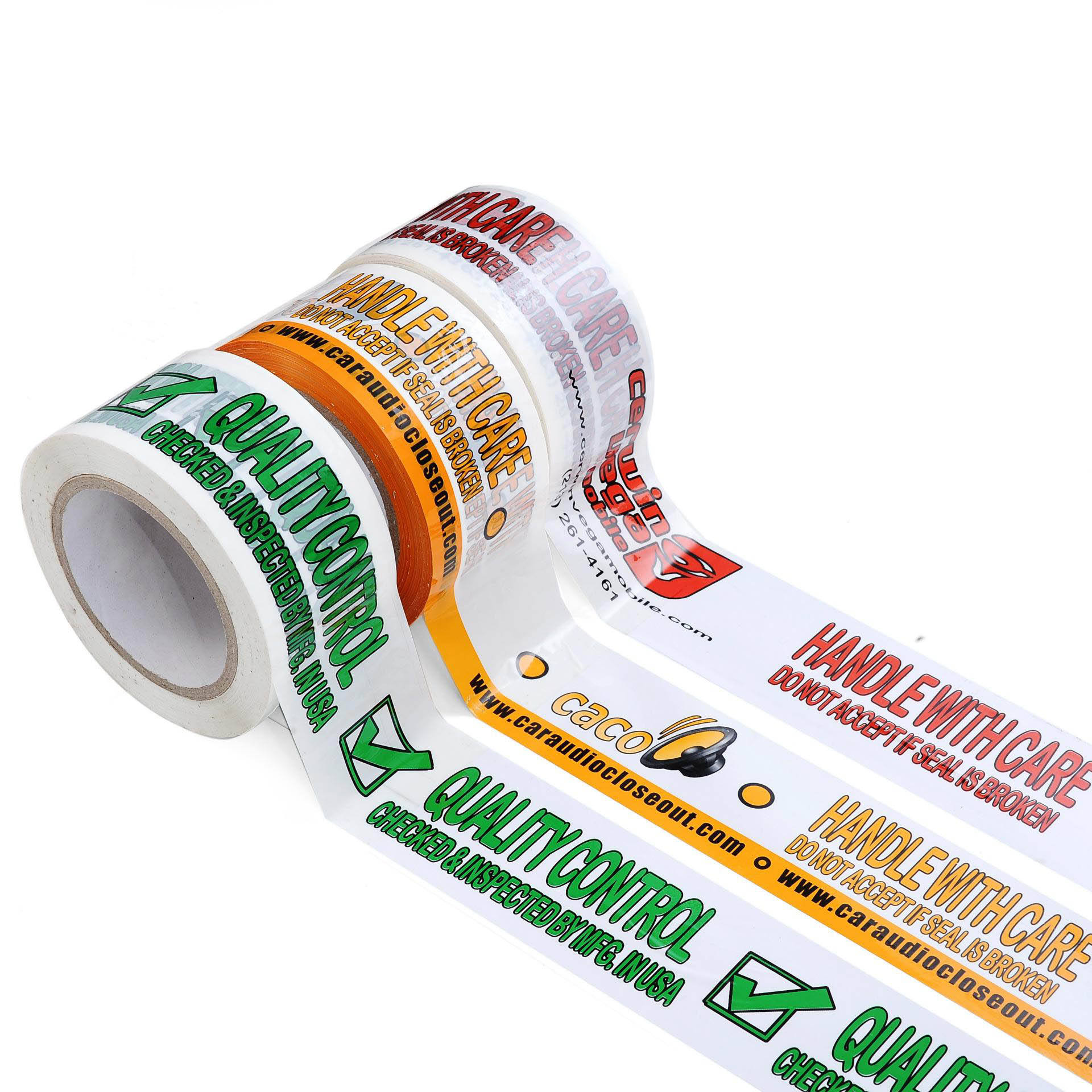
When selecting between BOPP Film and PET film, physical performance characteristics often determine suitability for specific applications.
Due to biaxial orientation, BOPP Film has high tensile strength. However, PET film typically exhibits even higher tensile strength and dimensional stability under stress.
BOPP Film performs well in packaging applications requiring flexibility and impact resistance. Its lighter density makes it suitable for flexible packaging and label facestock materials.
PET film, while strong, can be more rigid.
One of the biggest differences between BOPP Film and PET film is heat resistance.
BOPP Film: Softening point around 130°C
PET Film: Can withstand temperatures up to 220°C
For applications involving high-temperature sterilization or hot-fill packaging, PET film may be preferred.
BOPP Film offers excellent moisture barrier properties, making it ideal for dry food packaging such as snacks and bakery items.
PET film provides moderate moisture resistance but better oxygen barrier performance when coated.
| Feature | BOPP Film | PET Film |
|---|---|---|
| Tensile Strength | High | Very High |
| Impact Resistance | Good | Moderate |
| Heat Resistance | Moderate | Excellent |
| Moisture Barrier | Excellent | Moderate |
| Flexibility | High | Moderate |
In many food packaging applications, BOPP Film provides a better balance between strength, flexibility, and cost.
Optical clarity and appearance are essential in packaging and labeling.
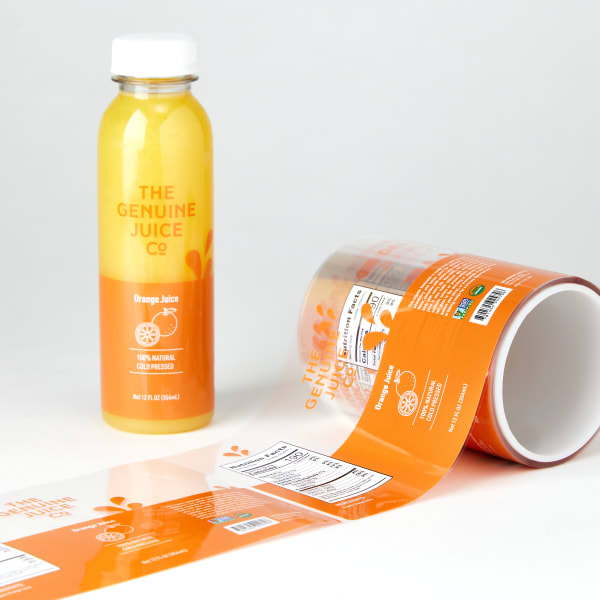
BOPP Film is known for excellent clarity and high gloss, making it ideal for “no-label look” beverage packaging and premium branding.
PET film also provides excellent transparency but may have slightly higher haze depending on grade.
Corona-treated BOPP Film supports high-quality printing using flexographic, gravure, and digital methods.
PET film also supports high-resolution printing but may require specific surface treatments for optimal ink adhesion.
Both BOPP Film and PET film are available in matte, metallized, and coated versions.
Metallized BOPP Film is widely used for snack packaging due to its combination of barrier performance and aesthetic appeal.
| Optical Feature | BOPP Film | PET Film |
|---|---|---|
| Clarity | Excellent | Excellent |
| Gloss | High | High |
| Print Compatibility | Excellent | Excellent |
| Matte Options | Available | Available |
| Metallization | Common | Common |
For high-clarity packaging and cost efficiency, BOPP Film is often preferred.
Both materials serve diverse industries, but their usage patterns differ based on performance needs.
BOPP Film dominates dry food packaging such as:
Snack wrappers
Biscuit packaging
Bakery products
Confectionery wraps
Its excellent moisture resistance and lightweight nature make BOPP Film ideal for these applications.
PET film is often used in:
Retort pouches
High-temperature packaging
Microwaveable trays
Coffee packaging laminates
BOPP Film is widely used for pressure-sensitive labels, particularly in beverage and cosmetic industries.
Advantages of BOPP Film for labels:
Water resistance
Tear resistance
Lightweight
Cost-effective
PET film labels are preferred when:
High heat resistance is required
Industrial durability is necessary
Both BOPP Film and PET film are used in lamination for books, documents, and packaging. PET film offers higher scratch resistance, while BOPP Film provides lower cost and good clarity.
PET film is commonly used in electrical insulation and high-temperature industrial environments.
BOPP Film is used in tapes, packaging, and general-purpose wrapping.
The global demand for flexible packaging continues to rise due to:
E-commerce growth
Urbanization
Rising snack consumption
Premium branding trends
BOPP Film holds a significant market share in flexible packaging due to its balance of performance and affordability.
PET film demand remains strong in high-performance applications.
Choose BOPP Film when:
Moisture resistance is critical
Cost control is a priority
Lightweight packaging is desired
High clarity and gloss are required
Flexible packaging is needed
Choose PET film when:
High heat resistance is necessary
Industrial strength is required
Dimensional stability under extreme temperatures is critical
The main difference lies in polymer composition. BOPP Film is polypropylene-based, while PET film is polyester-based, leading to differences in heat resistance, density, and cost.
Yes, BOPP Film is generally more cost-effective due to lower material and production costs.
BOPP Film typically offers better moisture barrier performance compared to PET film.
PET film is better suited for high-temperature environments.
Yes, BOPP Film is recyclable within polypropylene recycling streams, depending on local facilities.
In conclusion, both BOPP Film and PET film serve critical roles in packaging and industrial applications. However, BOPP Film stands out for its lightweight structure, cost efficiency, moisture resistance, and versatility in food packaging and labeling. PET film excels in high-temperature and heavy-duty applications. Understanding the differences between BOPP Film and PET film allows businesses to make informed material selection decisions that balance performance, cost, and sustainability.


