
- Home
- Adhesive Tapes
- Self-adhesive Label
- Label Jumbo Roll
- Solutions
- About Us
- News & Insight
- Resources
- Contact Us


Views: 0 Author: Site Editor Publish Time: 2026-02-13 Origin: Site


Choosing the right Masking Tape for different surfaces is more important than many people realize. Whether you are painting walls, refinishing furniture, detailing a car, working on crafts, or managing industrial projects, selecting the proper Masking Tape can determine the final quality of your work. Poor tape selection can lead to paint bleed, adhesive residue, surface damage, or wasted time and money.
In recent years, the market for Masking Tape has expanded significantly due to growth in DIY home improvement, automotive refinishing, construction, and industrial manufacturing. As a result, manufacturers now offer specialized Masking Tape products designed for specific surfaces, temperatures, and environmental conditions.
This comprehensive guide will help you understand Masking Tape, explore the different types available, analyze key performance factors, compare product specifications, and provide practical application tips. By the end of this article, you will know how to choose the best Masking Tape for your project with confidence.
Before selecting the ideal Masking Tape, it’s essential to understand what it is and how it functions.
Masking Tape is a pressure-sensitive adhesive tape made from a thin, easy-to-tear paper backing combined with a rubber-based or acrylic adhesive. It is designed to temporarily adhere to surfaces and be removed without leaving residue or causing damage.
The key characteristics of Masking Tape include:
Easy application and removal
Clean removal without residue
Flexible paper backing
Moderate adhesion strength
Paint compatibility
Because of these properties, Masking Tape is widely used in painting, labeling, bundling, and surface protection applications.
There are several types of Masking Tape, each engineered for different purposes.
This type of Masking Tape is suitable for light-duty applications such as household painting, labeling, and crafting.
Designed specifically for painting projects, painter’s Masking Tape offers clean paint lines and minimal bleed-through.
Automotive-grade Masking Tape withstands high temperatures and solvents used in spray painting.
Used in industrial processes such as powder coating, this Masking Tape resists heat and maintains adhesion at elevated temperatures.
Outdoor projects require Masking Tape that can resist UV degradation without breaking down or leaving residue.
Understanding these types helps narrow down the correct Masking Tape for your surface.
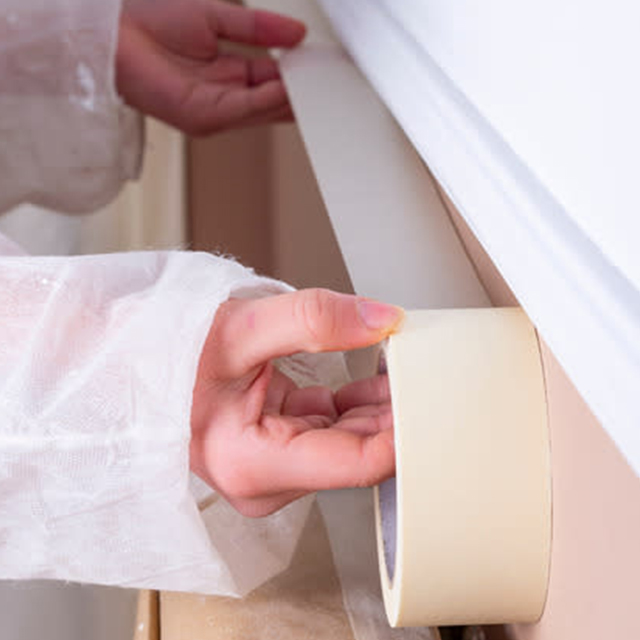
Selecting the right Masking Tape requires evaluating multiple factors.
Different surfaces require different levels of adhesion. The wrong Masking Tape can damage delicate materials or fail to stick to rough surfaces.
Common surface types include:
Painted drywall
Wood
Glass
Metal
Plastic
Brick or concrete
For delicate surfaces like freshly painted walls, choose low-adhesion Masking Tape. For rough surfaces like brick, use higher-adhesion Masking Tape.
Surface compatibility is one of the most critical decision-making factors.
Adhesion strength determines how firmly Masking Tape bonds to a surface.
Adhesion levels typically range from:
Low adhesion (delicate surfaces)
Medium adhesion (standard walls and trim)
High adhesion (metal, concrete, automotive surfaces)
Choosing the right adhesion level ensures effective masking without surface damage.
Using excessively strong Masking Tape on delicate surfaces can result in peeling paint or residue.
The width of Masking Tape affects efficiency and precision.
Common widths include:
0.5 inch (fine detailing)
1 inch (general masking)
2 inches (large surfaces)
Longer rolls reduce replacement frequency, making large projects more efficient.
Choosing the correct width improves coverage and minimizes overlapping.
Temperature resistance is especially important for automotive and industrial applications.
Standard Masking Tape performs well between 10°C and 40°C. However, high-temperature Masking Tape can withstand temperatures up to 120°C or higher.
For example:
| Application | Required Temperature Resistance |
|---|---|
| Interior painting | Low |
| Automotive spray painting | High |
| Powder coating | Very High |
Using standard Masking Tape in high-temperature environments can lead to adhesive failure.
Outdoor projects expose Masking Tape to sunlight. UV rays can degrade adhesive and paper backing.
UV-resistant Masking Tape is designed to:
Withstand sunlight for extended periods
Remove cleanly after exposure
Maintain adhesion strength
For exterior painting projects lasting several days, UV resistance is essential.
Even the best Masking Tape requires proper application techniques.
Dust, grease, and moisture reduce adhesion. Always clean and dry surfaces before applying Masking Tape.
Press Masking Tape firmly along the edge to prevent paint bleed.
Remove Masking Tape before paint fully cures to prevent peeling.
Store Masking Tape in a cool, dry place to maintain adhesive quality.
For sensitive surfaces, test a small section of Masking Tape first.
Avoid these frequent errors when using Masking Tape:
Using high-adhesion Masking Tape on delicate surfaces
Leaving Masking Tape on surfaces for too long
Applying Masking Tape to dirty surfaces
Ignoring temperature conditions
Using expired Masking Tape
These mistakes can compromise results and increase project costs.
When choosing Masking Tape, price should not be the only consideration.
Higher-quality Masking Tape may cost more initially but reduces:
Surface damage repair
Repainting costs
Time spent correcting paint bleed
Material waste
For professional contractors, investing in premium Masking Tape improves productivity and client satisfaction.
Choosing the right Masking Tape for different surfaces requires understanding surface type, adhesion level, temperature resistance, UV resistance, and tape dimensions. Whether you are painting walls, detailing vehicles, or handling industrial processes, selecting the appropriate Masking Tape ensures clean results, surface protection, and project efficiency.
By carefully evaluating your project requirements and matching them with the correct Masking Tape, you can avoid costly mistakes and achieve professional-quality results.
Low to medium adhesion Masking Tape is best for painted drywall to prevent surface damage.
Yes, UV-resistant Masking Tape is specifically designed for outdoor use and prolonged sun exposure.
It depends on the type. Standard Masking Tape should be removed within 24–48 hours, while UV-resistant versions can last longer.
Not always. High-adhesion Masking Tape is ideal for rough surfaces but may damage delicate materials.
Yes, extreme heat or cold can reduce adhesive effectiveness. Choose temperature-resistant Masking Tape for demanding environments.
By understanding these factors and industry best practices, you can confidently select the right Masking Tape for any surface or project.


