
- Home
- Adhesive Tapes
- Self-adhesive Label
- Label Jumbo Roll
- Solutions
- About Us
- News & Insight
- Resources
- Contact Us


Views: 0 Author: Site Editor Publish Time: 2026-04-25 Origin: Site


Selecting the wrong tape often leads to costly rework and hours of wasted labor. You might experience frustrating paint bleed-through or stubborn adhesive residue. It can even pull up existing substrate layers entirely. The reality in the industry remains clear. Not all Adhesive Tapes are created equal. Professional buying decisions must shift. You should stop relying on a simple price-per-roll mindset. Instead, match specific chemical and physical properties against exact project demands. If you ignore these properties, you risk ruining delicate finishes. You also risk failing to adhere to rough surfaces. This guide provides a technical evaluation framework. It targets professionals and serious DIYers. You will learn how to match the correct Masking Tape to specific substrates. We cover environmental conditions and strict project timelines. You can finally eliminate the guesswork to guarantee clean removal. Expect sharp paint lines every single time you apply it.
The Adhesion-to-Surface Rule: Adhesive strength should be inversely proportional to surface fragility (the more delicate the surface, the lower the tack required).
Anatomy Matters: Performance is dictated by combining the right backing (e.g., crepe vs. washi paper) with the correct adhesive chemistry (rubber, acrylic, or silicone).
Timing is Critical: Application environment (50°F–100°F) and removal timing (when paint is "touch dry," not fully cured) dictate clean removal without residue.
Professionals need a reliable business and project framing tool. You should adopt the Surface, Environment, and Time (S.E.T.) model. This framework eliminates constant guesswork. It helps you standardize purchasing across multiple job sites. Relying on brand colors alone causes frequent failures. You must evaluate the underlying application variables.
Always assess the exact material first. You need to identify porosity and general texture. Substrates range from entirely smooth to exceptionally rough. Fragility plays a massive role in your selection process. Fresh paint and old wallpaper act as highly delicate surfaces. Hard materials like glass and concrete require entirely different approaches. Assessing these traits ensures you select the correct initial tack.
You must evaluate indoor versus outdoor variables. Sun exposure presents a massive threat to standard materials. UV rays degrade common adhesives rapidly. Extreme temperatures also destroy bond integrity. High heat bakes the adhesive directly into the substrate. Freezing cold prevents proper bonding. You must match the material rating to the local climate.
Calculate how long the product will remain on the substrate. We refer to this duration as dwell time. Multi-surface tapes may offer 14-day clean removal guarantees. Heavy-duty options behave differently. They often leave severe residue if left past 24 hours. Prolonged dwell times require specialized chemistry to prevent surface damage.
Framework Element | Key Evaluation Criteria | Common Failure Point |
|---|---|---|
Surface | Porosity, Texture, Fragility | Using high-tack adhesives on uncured paint layers. |
Environment | UV Exposure, Temperature, Humidity | Applying standard indoor materials on sun-exposed exterior windows. |
Time | Expected Dwell Time (Hours vs. Days) | Leaving a 24-hour product attached for over two weeks. |
Understanding internal manufacturing components gives buyers a massive advantage. You can accurately predict behavior under intense physical stress. All Adhesive Tapes consist of two main parts. They feature an adhesive layer and a backing layer. The exact combination defines the ultimate performance profile.
The chemical makeup dictates how firmly the product bonds. It also determines how it responds to prolonged environmental exposure.
Rubber-based: These options provide very high initial tack. They are highly cost-effective for general jobs. However, they remain highly vulnerable to temperature fluctuations. They also degrade quickly under UV light. You face a high residue risk outdoors.
Acrylic-based: This chemistry remains highly flexible. It boasts excellent UV-resistant properties. It will not yellow over time. Acrylic stands as the ideal choice for longer dwell times. It almost always guarantees clean removal indoors.
Silicone-based: Silicone provides maximum temperature resistance. It often survives extreme heat up to 93°C (200°F) or more. This makes it the standard choice for powder coating. You will also see it dominating industrial automotive baking processes.
The backing dictates physical flexibility and moisture resistance. It protects the adhesive underneath from external damage.
Crepe Paper: This material proves highly conformable. You can tear it easily by hand. It serves as the best option for navigating sharp curves. It handles irregular surfaces quite well.
Washi Paper: Washi delivers an ultra-thin profile. It is surprisingly tear-resistant. It prevents liquid bleed exceptionally well. Combined with acrylic adhesives, it delivers the sharpest paint lines possible.
PVC/Vinyl: Vinyl supplies a completely waterproof barrier. It remains highly tear-proof during heavy physical friction. Builders strongly prefer it for tough exterior surface protection.
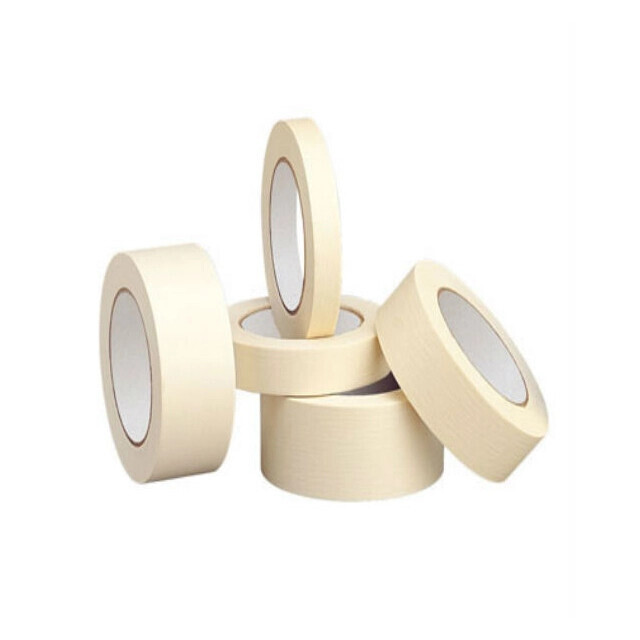
You must matrix the right Masking Tape to specific physical demands. Every substrate interacts differently based on porosity and strength. Applying one generic roll everywhere guarantees costly failures.
These substrates demand specialized handling. You must apply an ultra-low tack product. This requirement helps prevent total substrate destruction during removal.
There is a massive risk factor here. Paint often feels dry quickly. However, it can take up to 30 full days to completely cure. Always use "Delicate" designated tapes on surfaces painted within the last month. Furthermore, do not use standard tapes on lacquered coatings. Lacquer reacts poorly and often chips upon tape removal.
These materials generally require medium adhesion levels. Multi-surface tapes perform exceptionally well here.
You still face specific risk factors. Smooth surfaces easily display leftover adhesive residue. It becomes highly visible on glass or metal. We strongly recommend acrylic adhesives for these applications. They perform best if the tape will remain for multiple days.
Rough substrates present unique physical challenges. Your main requirement is high-adhesion chemistry. You also need heavy-duty conformability to fill deep material gaps.
The risk factor reverses here. Low-tack tapes will prematurely detach from dusty brick. Rough jobs require a very thick backing. This thickness resists intense abrasion. It withstands heavy friction during demanding prep work.
Surface Category | Material Examples | Required Tack Level | Recommended Backing |
|---|---|---|---|
Delicate | Fresh Paint, Wallpaper, Hardwood | Ultra-Low Tack | Washi Paper |
Smooth | Glass, Metal Trim, Vinyl | Medium Tack | Crepe or Washi Paper |
Rough | Brick, Stucco, Concrete | High Tack | Heavy-Duty Crepe or PVC |
The environment actively fights against your application. Ignoring weather variables ruins otherwise perfect preparation work. You must account for sun, heat, and moisture.
Direct sunlight acts as a powerful destructive force. It breaks down standard rubber adhesives rapidly. This process causes the paper backing to flake off in brittle pieces. Simultaneously, it bakes the remaining adhesive deeply into the surface. Removing this baked-on residue requires harsh chemical solvents. It often damages the underlying material permanently.
Exterior projects carry strict material demands. You absolutely require UV-resistant products. Many outdoor formulations are rated for 14 to 30 days of clean removal. You also need waterproof backings. Vinyl and treated options withstand heavy humidity and overnight rain. Standard paper breaks down entirely when wet.
Temperature dictates how effectively the bond forms. The optimal application temperature sits firmly between 50°F and 100°F (10°C–38°C). Application outside this specific window creates immediate problems. Cold environments compromise the initial tack. The product simply falls off. Excessively hot environments cause premature adhesive melting. The glue liquefies and smears across your clean substrate.
Even the best materials fail if applied improperly. Application technique directly influences the final outcome. Following professional protocols guarantees clean lines and zero damage.
Avoid stretching: Never pull the roll tightly during application. Stretching tape causes it to shrink back to its original size over time. This movement lifts the edges completely. It directly allows wet paint to bleed underneath.
Apply in segments: Use manageable 6-to-12-inch strips. This rule applies especially heavily around sharp curves. Short segments offer better control and prevent accidental stretching.
Observe bonding time: Wait 30 to 60 minutes post-application before painting. The adhesive needs this quiet time to bond properly to the microscopic surface texture.
Textured drywall presents a massive headache for standard applications. Tiny gaps under the edge invite immediate paint bleed. You must force the material into these hidden gaps.
Burnish the edges: Use a flexible putty knife. You can also use a standard 5-in-1 painter's tool. Firmly press the edges down against the wall. This mechanical pressure seals tiny air pockets.
Seal the Edge: This remains a closely guarded professional secret. First, paint over the tape edge using the existing wall's base color. Let it dry. This step fills any remaining gaps completely. It ensures the new contrasting topcoat cannot bleed through later.
Removal timing ruins more jobs than bad application. Do not wait for the area to dry entirely. You must catch the coating at the perfect moment.
Timing matters: Remove the strips when the paint becomes "dry to the touch." It should feel semi-dry, not fully cured. Removing it early prevents peeling the new paint film off the wall.
Use the right angle: Pull the material slowly. Always maintain a strict 45-degree angle. Pulling straight out rips the fresh coating.
Manage thick coatings: You might be working around heavy texture or thick latex. Lightly score the edge first. Use a sharp utility knife. This severs the bridge between the tape and the new wall finish.
Choosing the correct adhesive tape should be based on Surface, Environment, and Time. Delicate surfaces need lower tack, outdoor conditions require UV and weather resistance, and longer dwell times demand more stable adhesive chemistry. JUTU offers adhesive tape materials through www.jutulabel.com, including solutions for masking, bonding, protection, and industrial use. By evaluating surface texture, environmental exposure, and expected application time before purchase, buyers can reduce residue, peeling, paint bleed, and job-site rework.
A: The exact duration depends entirely on the adhesive base and total UV exposure. Standard rubber tape safely lasts 1 to 3 days. Professional acrylic multi-surface tapes can safely last 14 to 30 days indoors. Prolonged sun exposure reduces these timelines drastically. Always check the manufacturer's dwell time rating.
A: Several factors cause this frustrating issue. Either the underlying paint was not fully cured, which can take up to 30 days. Alternatively, the surface was not properly cleaned before application. Finally, you might have incorrectly used a high-tack product on a delicate, newly finished surface.
A: "Painter's tape" represents a highly specialized sub-category. It is formulated specifically for clean removal and longer dwell times. It incorporates UV-resistant acrylic adhesives. Standard options use cheaper rubber adhesives. Standard options leave sticky residue easily and can severely damage substrates if left on too long.


