
- Home
- Adhesive Tapes
- Self-adhesive Label
- Label Jumbo Roll
- Solutions
- About Us
- News & Insight
- Resources
- Contact Us


Views: 0 Author: Site Editor Publish Time: 2026-03-19 Origin: Site


PVC tape is one of the most common items in toolboxes—used by electricians, maintenance teams, DIY users, and installers across many industries. It’s easy to carry, quick to apply, and versatile for bundling, marking, and insulating. But because it’s so common, it’s also often misused. A wrap that looks neat on day one may loosen after heat cycles. A tape that seems fine indoors may fail in humid or oily environments. And a poor wrap around a splice can leave gaps that compromise insulation performance. That’s why knowing how to use PVC tape for electrical insulation safely is less about “how sticky it is” and more about using the right technique, choosing the right tape grade, and applying it in a way that holds up over time.
From our perspective at www.jutulabel.com, PVC tape performs best when users treat it as part of a complete insulation method rather than a quick cosmetic cover. Safe results depend on surface preparation, correct overlap, consistent tension, proper layering, and knowing when PVC electrical tape is the right choice—and when another insulation method is more appropriate. In this guide, we’ll walk through practical, step-by-step advice for using PVC tape safely for electrical insulation, with common mistakes to avoid and simple checks you can use on site.
PVC tape (often called PVC electrical tape) is typically used for:
insulating low-voltage wire joints and minor repairs
bundling and securing wire groups
adding abrasion protection to cable outer jackets
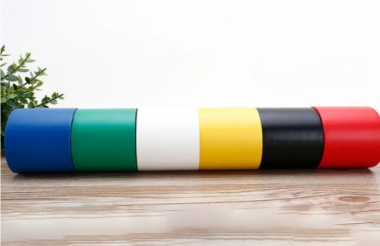
color coding and identification (phase marking)
temporary holding during installation work
The key word is insulation—but not every job is the same. Safe use starts with understanding where PVC tape fits best.
PVC tape is widely used, but it’s not a universal substitute for all insulation solutions.
secondary insulation over an already insulated splice
reinforcing cable jackets after minor damage (when conductor insulation is not compromised)
bundling and phase marking
indoor electrical maintenance where temperature and moisture are controlled
high-temperature environments near motors, boilers, or hot ducts
outdoor exposure without protection (UV, rain, temperature swing)
oily or chemical environments where adhesive performance may degrade
permanent repairs on damaged conductor insulation without proper underlying insulation
situations where code requires specific approved connectors or heat-shrink insulation
A safe approach is to treat PVC tape as a reliable tool within its intended use, not as a cure-all.
Not all PVC tapes behave the same. Differences can include:
thickness and elasticity
adhesive strength and aging behavior
temperature tolerance
flame-retardant performance (depending on grade)
conformability around irregular shapes
If you are buying tape for electrical insulation, select a product designed for electrical applications, not general packaging tape.
Use Scenario | Tape Focus | Why It Matters |
General indoor insulation | balanced elasticity + adhesion | stable wrap over time |
Bundling and identification | clean unwind + color stability | easier labeling |
Mild outdoor exposure | stronger adhesion + weather resistance | reduces lifting edges |
High vibration areas | conformability + holding power | prevents loosening |
Before any insulation work:
switch off the power source
lockout/tagout if required by your workplace
verify de-energized status with appropriate tools
confirm the circuit is safe before touching conductors
This is basic, but it’s also the step most associated with safety incidents when skipped.
PVC tape bonds best to surfaces that are:
dry
clean
free of oil, dust, and moisture
stable (not crumbling insulation)
wipe the cable jacket or splice area clean
remove moisture
if there is oil contamination, clean it properly (following safe site practices)
remove sharp burrs or edges that could cut tape
A tape wrap can fail quickly if applied over dust or oil. If the tape can’t bond, it will lift, creating gaps that weaken insulation.
This is a practical method used widely in field work. Adjust based on your project rules and local requirements.
Begin the wrap on a section of cable jacket or conductor insulation that is already intact—typically a short distance before the splice zone. This anchor helps prevent peeling at the edge.
PVC tape is elastic. Light stretch helps it conform and grip, but excessive stretching can cause:
tape “rebound” later
lifted edges
reduced long-term adhesion
Aim for a firm, consistent tension, not maximum pull.
A typical safe wrap uses 50% overlap. This ensures:
better coverage without gaps
more uniform insulation thickness
improved holding power at edges
Wrap past the joint and extend onto intact insulation on the other side. This prevents the wrap from ending directly on the weakest point.
For many applications, two to three layers are common, depending on:
voltage level
exposure risk
mechanical abrasion risk
shape irregularity of the joint
Finish with a clean cut (not tearing unevenly if possible) and press the tail down to ensure full contact.
Wrapping Step | Best Practice | Common Mistake |
Start point | begin on intact insulation | starting directly on the splice |
Tension | steady moderate stretch | over-stretching |
Overlap | 50% overlap | gaps or uneven overlap |
End point | finish on intact insulation | ending at joint edge |
Final seal | press end down firmly | leaving tail loose |
There isn’t one universal number, but these guidelines help:
1 layer: bundling, identification, temporary holding
2 layers: light insulation reinforcement in controlled indoor conditions
3 layers: added abrasion protection and more robust coverage for irregular joints
If the conductor insulation is damaged, tape alone is not a proper substitute for correct repair methods. In many professional practices, tape is used as a finishing layer over a properly insulated splice or connector system.
Moisture and oil reduce adhesion and increase the risk of lifting edges.
The edge of the wrap becomes a peel point. Ending on intact insulation reduces this risk.
Over-stretching may look neat initially but can lead to shrink-back and exposed gaps later.
If the conductor insulation is compromised, rely on correct repair procedures and approved insulation methods. Tape alone may not provide stable long-term protection.
Heat, UV, oils, and chemicals all affect tape aging. Choose tape grade and protection strategy accordingly.
After you finish wrapping, perform quick checks:
Can you see any gaps or exposed conductor? (should be no)
Are there lifted edges? (press down or rewrap)
Is the wrap smooth without sharp ridges? (ridges can wear)
Does the wrap feel stable when lightly tugged? (should not slip)
If the wrap looks uneven or loose, redo it. Tape is inexpensive; rework is safer than “hoping it holds.”
Using PVC tape for electrical insulation safely is mostly about disciplined technique: power off and verify, clean and dry the surface, wrap with consistent moderate tension, overlap evenly, and finish the wrap on intact insulation. PVC tape can be a reliable solution for insulation reinforcement, protection, bundling, and identification—but it performs best when used within its intended range and paired with correct electrical connection practices. Small details like avoiding over-stretching and preventing edge peel points often determine whether a wrap stays stable over time.
At www.jutulabel.com, we support customers with PVC tape solutions designed for practical field use—stable unwind, consistent adhesion, and reliable handling for electrical, industrial, and identification applications. If you want to learn more about selecting the right PVC tape grade for your market or installation environment, you’re welcome to visit www.jutulabel.com for more information.
Use steady moderate tension so the tape conforms without excessive stretch. Over-stretching can cause the tape to lift or shrink back later.
For most reinforcement wraps, two to three layers with 50% overlap is common. Bundling or marking often needs only one layer.
PVC tape is often used as a protective layer, but if conductor insulation is damaged, follow correct repair methods and local code requirements.
Common causes include wrapping over oil/moisture, ending the wrap at the joint, or over-stretching the tape so it rebounds and lifts edges.


