
- Home
- Adhesive Tapes
- Self-adhesive Label
- Label Jumbo Roll
- Solutions
- About Us
- News & Insight
- Resources
- Contact Us


Views: 0 Author: Site Editor Publish Time: 2026-03-14 Origin: Site


If you work with BOPP film long enough—whether for labels, lamination, packaging, or conversion—you’ve likely met the same frustrating problem: the film cuts fine in one run, then suddenly starts tearing, feathering at the edges, or splitting unpredictably. In production, tearing is not just a quality issue. It reduces yield, slows your line, increases waste, and creates customer complaints like ragged edges, poor die-cutting performance, or label dispensing problems. Many operators assume tearing means the film quality is “bad,” but in our experience, most tearing issues come from the cutting process itself: blade condition, tension profile, nip pressure, static, temperature, roll hardness, or slitting geometry.
At JUTU, we work with customers who convert BOPP film into finished label and packaging solutions. When tearing happens, our first step is to treat it like a system problem, not a single-factor defect. BOPP is strong, but it is also sensitive to notch effects and stress concentration. A tiny nick at the edge, an uneven tension zone, or a worn blade can turn a clean slit into a tear that runs. This guide shares practical, shop-floor tips to help you cut BOPP film cleanly and consistently—whether you are slitting, sheeting, or die-cutting—so you can protect both efficiency and finished-product quality.
BOPP (biaxially oriented polypropylene) is stretched in two directions during manufacturing. That orientation gives it strength and clarity, but it also means the film can propagate a tear if a notch or stress concentration appears. Common “tear triggers” include:
a dull or damaged blade creating micro-nicks
excessive tension, especially at the roll edge
uneven web path alignment causing wrinkling and stress lines
static attraction that disturbs web tracking
poor roll hardness or telescoping causing inconsistent unwind
incorrect slitting method for the film thickness and speed
The good news is that most of these factors can be controlled by process tuning and good maintenance habits.
Before you adjust blades, tension, or nip settings, make sure the BOPP roll itself is stable—because many “cutting problems” actually start at unwind. Check the edge condition first: crushed edges, dents, or impact marks create tiny notches that can quickly propagate into tears. Next, confirm roll hardness is consistent across the width; soft zones often trigger sudden tension spikes that lead to edge splitting. Look for telescoping, since misaligned layers increase lateral stress and cause web tracking drift. Finally, inspect the core for cracks or deformation, which can create wobble and unstable unwind. Tip: if tearing happens mainly near the roll edges, roll handling damage or uneven winding tension is usually the real root cause.
Different slitting methods behave differently with BOPP film.
Razor slitting: sharp and simple, good for thin films; sensitive to blade condition
Shear slitting: scissor-style, often cleaner edges for certain films; needs proper overlap and alignment
Score (crush) slitting: can deform film edges if not optimized; more sensitive to pressure settings
For many BOPP label films, razor or shear slitting often provides cleaner edges than heavy crush methods, but selection depends on thickness, coating, and line speed.
A blade that “still cuts” can still cause tearing. The difference between cutting and tearing is often microscopic.
replace blades before they become visibly dull
avoid reusing blades too long to “save cost” (waste usually costs more)
keep blade holders clean and stable
use correct blade angle for your slitting method
avoid vibration at high speeds by checking mount tightness
ragged or feathered edges
tears that start at the edge and run inward
edge dust and film “fuzz” buildup
Tension is the most common hidden cause of BOPP tearing. Too much tension creates stress, and any small edge notch becomes a tear path.
keep unwind tension stable and not overly high
avoid sharp tension transitions between zones
confirm tension is balanced across the web (no edge over-tension)
set rewind tension to avoid overly hard or overly soft rolls
If tearing increases when speed increases, tension and vibration are often involved. High speed magnifies small instability.
Nip rollers help stabilize the web, but excessive nip pressure can deform film and create stress lines.
Best practices
use the minimum nip pressure needed for stable traction
ensure rollers are clean and free of adhesive contamination
check roller parallelism and alignment
keep the web path straight, with correct wrap angles
Misalignment can create wrinkles, and wrinkles become tear starters at the slitting point.
BOPP film can generate static during unwind and slitting. Static causes:
unstable web tracking
dust attraction to edges
film sticking to rollers
inconsistent tension behavior
Practical fixes
use ionizing bars near unwind and slitting zones
ensure proper grounding of equipment
control humidity in dry environments
reduce unnecessary friction points in the web path
Static control is often the difference between stable cutting and unpredictable tearing.
BOPP behavior changes with temperature. In cold environments, film can feel stiffer and more prone to edge cracking under stress. In very warm environments, web handling can become soft and unstable.
Good practices
acclimate film rolls to the production environment before cutting
avoid cutting immediately after moving rolls from cold storage
maintain stable workshop temperature if possible
keep heat sources away from the web path to avoid local distortion
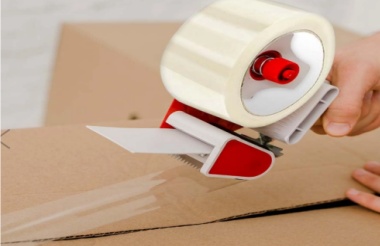
Poor trim removal can pull on the film edge and create tearing. If your trim is being pulled too aggressively, the tear can propagate into the usable web.
Best practices
set trim suction or winding tension appropriately
avoid trim pulling that “yanks” the edge
keep trim path smooth and low-resistance
check trim knives and suction ports for buildup
Problem symptom | Most likely causes | Fast checks |
Tearing starts at edge | dull blade, roll edge damage, trim pull | inspect edge + replace blade |
Tearing increases with speed | high tension, vibration, static | reduce tension + check static |
Feathered edges | incorrect blade angle, worn blade | adjust angle + new blade |
Random tearing points | web wrinkles, contamination, unstable unwind | check web path + clean rollers |
Tearing after rewinding | rewind tension too high/low | adjust rewind profile |
If your “cutting” is actually die-cutting labels, tearing often shows up during matrix stripping or dispensing.
Key tips:
ensure die pressure is enough to cut cleanly without over-penetration
maintain sharp dies and clean anvil surfaces
optimize matrix removal angle and tension
keep adhesive and liner combinations matched for stable release behavior
Most tearing is process-driven, but film issues can contribute when:
roll edges are consistently damaged across multiple rolls
thickness profile is unstable (gauge variation across web)
winding is inconsistent (hard-soft zones)
film has micro-gels or defects that act as crack initiators
In these cases, providing clear feedback to the film supplier with photos and defect location data helps speed resolution.
Cutting BOPP film without tearing is mainly about controlling stress and preventing notch defects. Sharp blades, stable tension, clean web alignment, correct slitting method, and good static control work together to produce clean edges and consistent rolls. When tearing appears, it is usually a signal that one of these variables has drifted—not that the film is “impossible to cut.” A disciplined checklist approach saves time, reduces waste, and improves finished-product performance, especially in label converting where edge quality affects die-cutting and dispensing.
To learn more about BOPP film applications and converting support, visit www.jutulabel.com. If you want help troubleshooting tearing issues or selecting the right BOPP film specification for your converting process, you are welcome to contact us and share your film thickness, line speed, slitting method, and symptom details for practical recommendations.
High speed increases tension sensitivity, vibration, and static, which can amplify small blade or web handling issues. Stabilizing tension and improving static control often solves it.
It depends on thickness and process, but sharp razor blades work well for thin films, while shear slitting can provide cleaner edges when properly aligned and maintained.
Inspect roll edges, replace blades early, reduce edge over-tension, and ensure trim removal is not pulling too aggressively on the web edge.
Yes. Static can disturb web tracking and tension stability, leading to wrinkles and edge stress that trigger tears. Ionizing bars and grounding are common solutions.


