
- Home
- Adhesive Tapes
- Self-adhesive Label
- Label Jumbo Roll
- Solutions
- About Us
- News & Insight
- Resources
- Contact Us


Views: 0 Author: Site Editor Publish Time: 2026-03-26 Origin: Site


If you’re sourcing tape for industrial use, facility maintenance, packaging, or electrical work, you’ve probably heard both terms—PVC tape and electrical tape—used almost interchangeably. That’s where confusion starts. Some buyers assume they are the same product, while others assume “electrical tape” is always stronger. In reality, durability depends on what you mean by durable: resistance to heat, aging, moisture, abrasion, chemicals, UV exposure, or mechanical pulling. A tape that lasts longer in a dry indoor cabinet may fail quickly outdoors or around oil and heat.
At JUTU Label, we work with customers who need tape performance to be predictable in real environments. We often explain it this way: PVC tape describes the backing material, while electrical tape describes the application requirement. Many electrical tapes are made with PVC backing, but not all PVC tapes are designed to meet electrical insulation standards. So when you compare “PVC tape vs electrical tape,” the real comparison is usually between a general-purpose PVC tape and a PVC electrical insulation tape (or other electrical-grade tapes). In this guide, we’ll break down what each tape is, how durability should be measured, and which is more durable for common use cases.
PVC tape is a tape that uses polyvinyl chloride (PVC) as the backing film. It’s widely used because PVC backing can offer:
flexibility
good conformability around curves
decent abrasion resistance
moisture resistance
easy handling and clean cutting
PVC tape can be produced in many grades. Some are designed for packaging, color marking, bundling, surface protection, or general repairs. Others are specifically engineered for electrical insulation with higher dielectric strength and stricter performance control.
So “PVC tape” is not one single product category—it’s a material family.
Electrical tape is tape designed for electrical applications, especially:
insulating wire connections
bundling wires and harnesses
protecting cables from abrasion
providing a protective outer wrap on splices or terminations
Electrical tape is defined more by performance requirements than by the material alone. Many electrical tapes are PVC-based, but you can also find electrical tapes made from rubber, cloth, or other specialty polymers for specific environments.
A true electrical tape must perform reliably under:
electrical insulation needs
temperature cycling
aging
stretching and recovery
adhesion stability over time
That’s why “electrical tape” usually implies a quality and performance expectation beyond general-purpose tapes.
It depends on the grade and the job. But in most real-world comparisons:
Electrical-grade PVC tape is usually more durable for wiring insulation and long-term electrical use because it is formulated for stretching, recovery, and stable insulation performance.
General-purpose PVC tape may be more durable for non-electrical tasks like marking, temporary fixing, or packaging, especially when electrical insulation isn’t the primary requirement.
The biggest mistake is comparing a low-grade PVC tape to a high-grade electrical tape and assuming “PVC tape is weaker.” PVC electrical tape is still PVC tape—just engineered to a higher performance standard.
To compare durability correctly, you should define the failure mode you want to avoid.
Electrical environments often include heat from current, motors, or confined enclosures.
Electrical tape is usually engineered to maintain adhesion and flexibility under heat cycles.
Some general PVC tapes soften, shrink, or lose adhesion faster under heat.
If heat is a key factor, electrical tape typically wins.
Electrical tape often needs to stretch around wire bundles and then hold tension without unraveling. Higher-grade electrical tape is designed for:
controlled stretch
good elastic recovery
stable conformability without lifting edges
General PVC tape may stretch inconsistently or “neck down” too much, leaving gaps.
For wrapping and insulation durability, electrical tape is generally stronger.
Durability isn’t just about the backing—it’s also about the adhesive:
Will it stay stuck after months?
Will it ooze under heat?
Will it dry out and peel?
Electrical tape adhesives are often designed to balance:
long-term stick
removability without severe residue (depending on grade)
resistance to heat-driven flow
General PVC tape adhesives may be optimized for low cost or packaging speed rather than long-term aging.
Both PVC tapes and many electrical tapes resist moisture well, but the durability difference is in:
edge sealing stability
long-term adhesion in humid conditions
performance under temperature cycling with condensation
For outdoor or high-humidity wiring, electrical-grade tape usually performs more predictably.
In bundling and harness work, tape often faces abrasion from vibration and movement. PVC backing can be abrasion-resistant, but durability depends on thickness and formulation.
Some general PVC tapes for protection or duct marking may be quite strong mechanically, while some low-cost electrical tapes may be thinner.
For abrasion durability, you need to compare thickness and grade—not only the name.
Durability factor | General PVC Tape | Electrical Tape (Electrical-grade) | Which is usually better |
Heat aging | varies, often lower | designed for heat cycles | Electrical tape |
Stretch and recovery | inconsistent by grade | controlled stretch | Electrical tape |
Long-term adhesion | varies | more stable | Electrical tape |
Moisture exposure | good | good to excellent | Electrical tape (more consistent) |
Abrasion resistance | can be strong | depends on thickness | depends on grade |
Electrical insulation | not guaranteed | designed for insulation | Electrical tape |
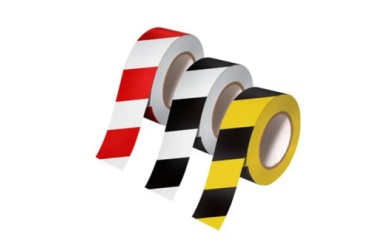
General PVC tape can be more cost-effective and durable for:
color coding and floor/pipe marking
temporary holding and bundling where insulation isn’t required
surface protection for light-duty use
packaging reinforcement and sealing (depending on adhesive)
If your application is more about visibility, marking, and general protection, PVC tape can deliver excellent value.
Electrical tape is usually the better option when:
insulating electrical splices
wrapping wire harnesses that move or vibrate
working in temperature-changing environments
requiring stable adhesion and stretch behavior
safety and reliability depend on insulation performance
If the application involves current, voltage, or safety, electrical-grade tape is the correct durability choice.
Here’s a practical selection checklist:
Is this an electrical insulation task or not?
If yes, choose electrical-grade tape.
What temperature range will the tape see?
Heat and cycling often reveal adhesive weakness quickly.
Will the tape be exposed to moisture, oil, or chemicals?
If yes, choose a tape grade formulated for that environment.
Is abrasion or vibration present?
Thicker backing and stable adhesive matter here.
Do you need removability or permanent hold?
Some tapes prioritize clean removal; others prioritize long-term lock.
PVC is a backing material. Electrical tape is a performance category.
Low-grade tape may fail under heat, aging, or vibration.
Outdoor UV, humidity, and heat cycles can destroy a tape that works fine indoors.
A tape that sticks strongly on day one may creep, ooze, or peel after months.
At JUTU Label, we help customers choose tape based on real application conditions, not just the label name. When customers ask “PVC tape vs electrical tape, which is more durable,” we first define durability: heat, moisture, stretching, abrasion, or long-term adhesion. In many cases, an electrical-grade PVC tape delivers the best long-term durability for wiring and insulation work, while general PVC tape can be more cost-effective and durable for marking and non-electrical protection tasks. The right choice is the one that matches the environment, the mechanical stress, and the safety requirement.
To learn more about PVC tape solutions and selection support, you are welcome to visit www.jutulabel.com for more information.
So, which is more durable—PVC tape or electrical tape? In most electrical applications, electrical-grade tape is more durable because it is engineered for stable insulation performance, controlled stretching, and long-term adhesion under heat and aging. However, for non-electrical uses like marking, bundling, and general protection, PVC tape can be highly durable and cost-effective when the right grade is chosen. The best approach is to define what “durability” means in your environment, then select the tape that is designed for that specific stress.
Not always. Many electrical tapes use PVC backing, but not all PVC tapes meet electrical insulation performance requirements.
Electrical-grade tape is usually more durable in heat because it is designed for temperature cycling and long-term adhesion.
It is not recommended unless the tape is specifically rated for electrical insulation and matches the required safety performance.
Define the environment and stress factors—heat, moisture, stretch, abrasion, and required insulation performance—then choose the tape grade designed for those conditions.


