
- Home
- Adhesive Tapes
- Self-adhesive Label
- Label Jumbo Roll
- Solutions
- About Us
- News & Insight
- Resources
- Contact Us


Views: 0 Author: Site Editor Publish Time: 2026-04-24 Origin: Site


You spend hours prepping, painting, and perfecting a room. Then you face a nightmare during the final step. Peeling off the protective border tears away chunks of your fresh work. Jagged edges remain. This ruined finish results in wasted labor, compromised aesthetics, and costly rework. Peeling is rarely a stroke of bad luck. It is a predictable failure. Improper adhesive selection, poor timing, or inadequate surface preparation usually cause it.
This guide provides an evidence-based framework for avoiding these disasters completely. We will cover selecting the right tools for your specific substrate. You will also learn exact standard operating procedures to guarantee a crisp, damage-free edge. Following these rules transforms a stressful cleanup into a satisfying final reveal. Protecting your investment requires careful attention to detail. Every brush stroke and every peeling motion matters immensely to the final appearance. Let us dive into the mechanics of proper edge protection.
Timing is critical: Remove tape when the paint is "dry to the touch" but not fully cured (typically a 15–30 minute window after the final coat).
Technique matters: Pulling at a strict 45-degree or 90-degree angle minimizes lateral stress on the fresh paint film.
Hardware dictates outcomes: Investing in purpose-built, low-tack adhesive tapes (like Washi paper) drastically reduces the risk of substrate damage compared to general-purpose masking tape.
Pre-emptive scoring prevents tears: Using a razor to break the "paint bridge" is mandatory for fully dried applications.
Many homeowners blame bad luck when a clean line turns into a jagged mess. We need to frame this problem correctly. Peeling usually stems from simple mechanical forces overriding weak chemical bonds. If we understand the physics of a dried layer, we can establish clear evaluation criteria for the project. Paint does not just sit on a wall. It cures and interlocks.
First, consider the "bridging" effect. Modern latex formulas contain flexible synthetic resins. As they dry, they form a continuous plastic-like film over your wall. This film spans seamlessly across the painted drywall and over the protective border. If you pull blindly, you drag this entire continuous sheet along. The liquid bridge holds strong. It tears the color right off your newly finished drywall. Breaking this bridge requires deliberate mechanical action.
Next, we must address surface preparation. People often assume the sticky backing is always at fault. Sometimes, however, the product performs exactly as designed. Instead, the failure happens at the foundational layer. If your product's tack is stronger than the primer’s bond to the underlying substrate, the stronger bond wins. Poor surface cleaning or skipped sanding leads directly to this primer failure. Dust acts as a barrier. It prevents primer from biting into the drywall. Always clean your walls thoroughly before applying any primer.
What defines a successful job? Success requires a delicate balance of forces. You need proper material adhesion first. This prevents wet liquids from bleeding through the edge. Simultaneously, you must achieve controlled release. You want zero surface damage upon removal. Hitting this exact target relies heavily on picking the right tools. You also must execute precise physical techniques. We will explore these precise requirements in the following sections.
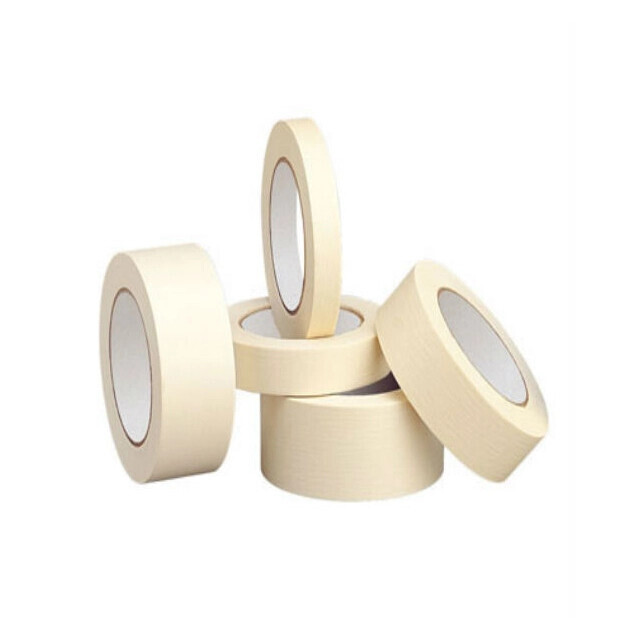
Not all masking solutions perform equally. Guide yourself by shortlisting products based strictly on surface sensitivity. You must match the hardware to the specific environment. Using the wrong product on a sensitive surface guarantees failure before you even open a paint can.
Let us compare general-purpose Masking Tape to dedicated painter's tape. Standard rolls feature high tack and aggressive adhesives. They grab hard and often leave a sticky residue behind. Professional painters do not recommend standard rolls for delicate painted surfaces. They easily rip fresh coatings off drywall. Standard rolls absorb moisture from the wet brush. This moisture causes the glue to fail and bleed.
Blue or green painter’s varieties utilize a medium-tack adhesive. They often include UV resistance for sunlit rooms. This option works best for standard drywall, robust wood trim, and fully cured surfaces. They offer moderate protection against heavy liquid saturation. They represent a balanced middle ground for most household tasks.
For critical applications, you should evaluate advanced solutions. Japanese Washi paper technology revolutionized this industry. Specialized delicate-surface options offer distinct evaluation dimensions. First, they feature an ultra-thin paper profile. This extremely thin barrier prevents thick liquid buildup at the seam. Second, they use specialized low-tack acrylic adhesives. These gentle bonds stay exceptionally safe on fresh coatings or delicate wallpaper. Choosing premium Adhesive Tapes drastically cuts the risk of edge tearing. They represent the highest tier of edge protection available today.
What if specialized rolls remain unavailable on your job site? You can employ a manual risk mitigation technique known as the "de-tacking" hack. Take your standard sticky strip. Press it firmly against your clothing, like a pair of clean denim jeans. Do this once or twice. The sticky side picks up micro-fibers. These fibers artificially lower the initial tack before you apply the strip to the wall. This trick saves delicate baseboards during emergencies.
Category | Tack Level | Best Use Case | Risk of Surface Damage |
|---|---|---|---|
Standard Masking | High | Cardboard, metal, rough wood | High |
Blue/Green Painter's | Medium | Cured drywall, sturdy trim | Moderate |
Washi Paper (Low-Tack) | Low | Fresh paint, wallpaper, faux finishes | Very Low |
Executing a perfect line means balancing manufacturer guidelines with professional practices. Following a strict chronology prevents easily avoidable errors. We break this process down into three distinct phases. Patience during these phases yields flawless results.
The "wet vs. dry" debate confuses many beginners. Removing barriers when everything is completely wet causes messy drips. Liquid easily seeps into your newly exposed clean line. Waiting several days, however, makes it bake onto the wall. A solid rule of thumb solves this timing dilemma. Wait until the freshly coated surface feels "dry to the touch." It should not feel "gummy" or tacky under your finger. Gummy layers stretch like elastic bands. They snap back and ruin the edge. For multi-coat jobs, do not peel between coats. Leave your barriers in place. You should pull them within a 15–30 minute window after applying the final coat.
Damage prevention actually starts during the painting phase. Keep your brush parallel to the protective line. Use a technique called feathering to minimize thickness. Apply color to the edge only when your brush bristles are semi-dry. Heavy liquid builds a thick, solid bridge over the seam. Feathering keeps this boundary extremely thin and manageable. A thinner bridge snaps easily when you finally peel.
Your physical movements dictate the final outcome. Professional decorators rely on specific pulling angles. Try these two proven methods to protect your substrate:
The 45-Degree Fold: Slowly pull the strip back onto itself at a 45-degree angle. This gentle motion breaks the sticky bond smoothly. It directs lateral force away from the freshly coated layer. Never pull straight up into the air.
The 90-Degree Pivot: Sometimes the sticky backing feels overly aggressive. It might feel stubbornly stuck to the trim. If so, shift immediately to a strict 90-degree perpendicular pull. Pulling straight out from the wall reduces sheer lateral force on the delicate drywall paper. It pulls the glue directly off the surface instead of dragging it across.
Real-world projects rarely follow perfect timelines. You might face worst-case scenarios where everything fully cures overnight. Perhaps someone left the protective borders on the wall for several days. These situations demand advanced mitigation strategies. Implement these techniques carefully to rescue your project.
If your coating dries into a solid, impenetrable sheet, pulling will cause a disaster. You must create a physical barrier first. Grab a sharp putty knife or a fresh snap-blade razor. Lightly score the exact seam where the border meets the wall. You only need to cut through the microscopic top layer. This physical break severs the solid bridge before you pull. A dull blade will drag and tear. Always snap off a fresh razor tip before scoring a room. A clean cut ensures a crisp reveal.
Here are common mistakes to avoid while scoring:
Pressing too hard and cutting deep into the underlying drywall paper.
Using a rusty or dull blade, which causes jagged micro-tears along the seam.
Scoring too far away from the actual seam, leaving an uneven lip on the trim.
Rushing the cutting motion, causing the blade to slip into the fresh color.
Sometimes the sticky backing hardens drastically over time. Direct sunlight or extreme room climate can bond it tightly to the baseboard. You can use thermal release tactics to save the project. Apply mild, sweeping heat with a standard hair dryer. Hold it a few inches away. The gentle warmth softens and loosens the glue backing. This temporarily reduces the tackiness. It allows for safe, gentle removal. You must keep the dryer moving constantly. Overheating the surface will cause your fresh coating to bubble and blister instantly. Heat changes the viscosity of the glue. It turns a solid, stubborn bond back into a pliable gel.
Certain environments present too much risk for standard masking techniques. You need scalability and smart workarounds. Sometimes, avoiding sticky products altogether eliminates the risk entirely. You must adapt to the texture in front of you.
Highly textured surfaces like heavy stucco or rough brick create nightmares for adhesives. Standard rolls fail to seal properly across deep grooves. Liquid bleeds right under the uneven edge. In these scenarios, advocate for dynamic masking tools instead. Use a rigid straight edge, a metal paint shield, or a wide putty knife. Hold the shield firmly into the corner while you brush. Wipe the metal blade clean after every few strokes. This creates a physical barrier. You avoid relying on sticky chemical bonds on unpredictable textures. A rigid shield perfectly bridges the gaps found in heavy brickwork.
Never trust a new product blindly. Always perform a quick validation test before a massive renovation project. You must verify primer stability and check for adverse reactions. Follow these simple steps to validate your setup:
Clean a tiny section of the wall to remove surface dust.
Apply a small test strip to an inconspicuous area. Behind a door or near the baseboard works perfectly.
Press the strip firmly into the surface to simulate actual use.
Leave it firmly pressed for exactly 24 hours.
Remove it the next day using the 45-degree peeling method.
If the underlying surface peels or flakes, you have a weak primer bond. Finding out your wall fails a pull test early saves hours of painful rework later. You can adjust your strategy before committing to an entire room.
Preventing paint from peeling requires treating tape removal as a technical step, not a simple cleanup task. The right low-tack tape, proper surface preparation, correct removal angle, and timely peeling all help protect fresh paint and delicate substrates. JUTU supplies masking tape and adhesive tape products through www.jutulabel.com for painting, protection, and temporary bonding needs. By selecting the right tape grade and following proper removal methods, users can achieve clean edges while reducing surface damage and repainting costs.
A: Peeling happens if you fail to score dried paint. It also occurs if you leave the adhesive on too long. Often, underlying primer failure is the real culprit. If the wall substrate wasn't properly cleaned or sanded before painting, the weak primer releases from the wall.
A: It is generally discouraged. Pulling protective borders while the surface is completely wet allows liquid to drip, run, or seep into the newly exposed line. You should wait until it is at least tacky or strictly "dry to the touch."
A: Standard options bake onto surfaces due to UV exposure and climate. Always check manufacturer ratings. Standard options typically degrade after 3–7 days. Premium options may offer 14–60 day clean-release windows before the glue hardens entirely.


